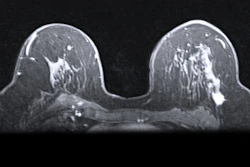
Surveillance breast MRI helps detect more cases of clinically occult cancer in Black women, according to research presented at the annual meeting of the American Society of Clinical Oncology (ASCO) in Chicago.
The retrospective, observational study showed that while all MRI indications led to higher breast cancer detection rates for Black women compared with non-Hispanic White women, surveillance exams yielded the highest rate – and with a similar false-positive rate to high-risk screening exams.
“Expediting access to surveillance MRI may help address persistent racial disparities in breast cancer outcomes,” first author and presenter Elizabeth Susan McDonald, MD, PhD, of the University of Pennsylvania told AuntMinnie.  Elizabeth Susan McDonald, MD, PhD, of the University of Pennsylvania presented the poster results at ASCO 2026.Elizabeth Susan McDonald
Unless there are additional patient risk factors, current guideline from organizations such as ASCO and the American College of Radiology do not recommend the use of routine surveillance breast MRI. However, Black women in the U.S. have 40% higher breast cancer mortality compared to non-Hispanic White women, according to the researchers.
In their study, researchers retrospectively compared the performance of breast MRI by both the radiologist-coded indication and patient race for exams performed at their institution between January 2, 2014, and October 29, 2025.
Of the 38,063 exams, 15,682 (41%) were for high-risk screening, 10,905 (29%) were for supplemental screening, and 11,476 (30%) were conducted for surveillance for prior breast cancer.
They found that Black women had significantly higher cancer detection rates across all MRI indications. However, the greatest difference was for surveillance MRI.
Cancer detection rates per 1,000 women by MRI indication | |||
| High-risk screening | Supplemental screening | Surveillance for prior breast cancer |
Black women | 2.7% (PPV: 16.2%) | 2.8% (PPV: 16.2%) | 3.7% (PPV: 26.5%) |
White women | 1.4% (PPV: 12%) | 1.8% (PPV: 11.2%) | 2.4% (PPV: 22.6%) |
“This population is at a high enough risk for breast cancer that they should be getting routine MRI,” McDonald said. “Early detection offers the best chance for optimal survival. Our data support a role for surveillance MRI.”
After adjusting for age and race, the researchers also found a 53% difference (odds ratio: 1.53 [1.26-1.86, p < 0.001) for surveillance MRI in comparison with high-risk screening.
She noted that the study is observational in nature and subject, of course, to the biases of all observational studies.
“So it needs to be repeated in a larger cohort, and it needs to be modeled to take away as many of those biases as you can take away,” she said.
The study results were unexpected, she said.
“But it made us want to make sure that the research is continued in larger cohorts because if this is a real signal here or a signal that we continue to see, then all women, but especially Black women should be getting breast MRI after a cancer diagnosis,” she said.
For more of AuntMinnie’s coverage of ASCO 2026, click here.