"Science is the Star" is the theme of the Society of Nuclear Medicine and Molecular Imaging (SNMMI) annual meeting in Los Angeles this year -- and theranostics is among the applications that will share the spotlight.
“There’s never been a more exciting time to be in the nuclear medicine field,” Jean-Luc Urbain, MD, PhD, current SNMMI president, told AuntMinnie.com.
In addition, SNMMI 2026 will include a focus on cardiac PET and brain molecular imaging -- a move that was based on feedback from members who suggested the meeting had trended toward being dominated by applications in cancer, Urbain noted.
Still, the field of theranostics will take center stage at the meeting, with its developing “ecosystem” now requiring a framework that can standardize its methods with the goal of offering equitable care, Urbain said.


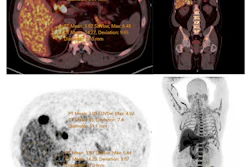



![(A-C) Representative whole-body maximum-intensity projection images and regional fused PET/CT images from three histologically confirmed osteosarcoma patients who underwent paired [68Ga]Ga-B7-H3-BCH PET/CT and 18F-FDGE PET/CT within seven days. (D) Multimodal imaging evaluation of Patient Three, including x-ray, MRI (T2-weighted imaging, T2WI), CT, and B7-H3 PET/CT.](https://img.auntminnie.com/mindful/smg/workspaces/default/uploads/2026/05/mei.XUQJWkpAJI.jpg?auto=format%2Ccompress&fit=crop&h=112&q=70&w=112)


![RET-targeted PET tracer highlights neuroendocrine prostate cancer tumors. Representative PET imaging shows strong tumor uptake of the RET-binding peptide tracer [⁶⁸Ga]Ga-DOTA-RET-L7 in a neuroendocrine prostate cancer (NEPC) model, supporting highly specific, high-contrast detection.](https://img.auntminnie.com/mindful/smg/workspaces/default/uploads/2026/05/screenshot-2026-05-27-205827.278Ys6PYU3.png?auto=format%2Ccompress&fit=crop&h=112&q=70&w=112)


