LOS ANGELES -- A PET/CT machine-learning model shows promise predicting radiation dose to tumors and healthy organs prior to radiopharmaceutical therapy (RPT), according to research presented at the Society of Nuclear Medicine and Molecular Imaging (SNMMI) annual meeting.
“F-18 [prostate-specific membrane antigen] PET/CT is already routinely performed and widely available in prostate cancer patients, but its potential to predict treatment radiation dose has not previously been explored," said lead researcher Amit Nautiyal, PhD, of University Hospital Southampton in the U.K., in a statement from SNMMI.
Dosimetry plays a central role in optimizing lutetium-177 (Lu-177) PSMA therapy, yet calculating it currently depends on post-therapy imaging, a process the authors noted is time-consuming and resource-intensive. Pre-therapy PET/CT offers an opportunity to assess potential treatment effectiveness and toxicity risk before therapy begins, the group hypothesized.
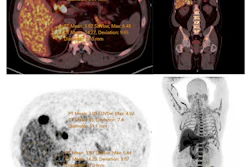
To that end, the researchers launched a proof-of-concept study and enrolled nine patients with metastatic castration-resistant prostate cancer referred for Lu-177 PSMA therapy, with data yielding 57 tumors, 36 salivary glands, and 18 kidneys for analysis. The team developed a machine learning mixed effects model incorporating uptake-based PET metrics, radiomic features, and clinical biomarkers, accounting for patient-level variability. Predictive estimates were then compared against dosimetry calculated after one completed cycle of Lu-177 PSMA therapy.
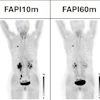
 A visual abstract of the study.Amit Nautiyal, PhD, and SNMMI
Significantly, the approach demonstrated that imaging data routinely collected as part of standard workup could be repurposed without requiring additional scans or patient burden, Nautiyal noted. The study is part of a planned five-year program aimed at collecting more data and developing a robust, validated model, he added.
"If validated in larger studies, this approach may improve patient selection and support better decision-making during pre-treatment assessment, helping to optimize Lu-177 PSMA therapy for individual patients," Nautiyal said.
Check out AuntMinnie’s full coverage of SNMMI 2026 on our ShowCast.