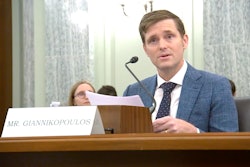
Some European radiologists are calling for resources and funding from either national authorities or the European Union (EU) to achieve the highest level of evidence and societal impact of radiology AI, according to a session held March 4 at ECR 2026.
 Daniel Pinto dos Santos, MD.
Until then, quick and smaller retrospective studies will continue to measure varied outcomes, according to Daniel Pinto dos Santos, MD, of the University Hospital of Cologne and the University Hospital of Frankfurt in Germany. Pinto dos Santos contributed to a discussion that highlighted what radiologists need to know about EU Health Technology Assessment (HTA) regulation.
"For us as doctors, it's very challenging to engage in and initiate those kinds of huge studies," explained Pinto dos Santos, a board member of the European Society for Medical Imaging Informatics (EuSoMII) and deputy editor for European Radiology, whose clinical work focuses on CT and abdominal imaging, as well as interventional radiology. "We as the radiological community are moving in the right direction, although it's still challenging."
In the meantime, radiologists have been asked to demonstrate clinical utility, patient-relevant outcomes, cost-effectiveness, and system impact, noted Jacob Visser, MD, of Erasmus University Rotterdam in the Netherlands, in the first talk.
"Radiology must transition to becoming a technology evaluator and evidence generator," said Visser, who now chairs the European Society of Radiology Subspecialties and Allied Sciences Committee (SASC) and has joined the European Society of Radiology Executive Council.
The session primarily focused on EU HTA regulation. It began on January 12 2025. Viewed as a coming force, there are opportunities on the horizon for radiologists, according to the panel.
Pinto dos Santos has participated in an early exercise of the HTA process. HTA considers all the value aspects related to the new technology, he explained. Importantly, HTA may become an activity to determine if there should be reimbursement for use of the technology, he added.
 Jacob Johannes Visser, MD.
"HTA is the cornerstone of valuable radiology," Visser explained. "All domains need to be considered. How does the technology, how does the AI impact the diagnostic decisions, the therapeutic decisions, and ultimately improve patient outcomes in a cost-effective way? To get to valuable radiology, we need to be involved in the product development as early as possible ... to make sure that the valuable products are being developed."
Further, a valuable radiology ecosystem requires continuous feedback loops, he added.
Moving forward, some medical devices will be selected for joint clinical assessment (JCA). The first decision on the selection of devices is expected in June 2026, and every quarter, the coordination group will look at eligible devices entering the market and make a recommendation for the selection for JCAs, explained Béla Dajka, a policy officer for the European Commission who joined the session.
At the same time, medical device regulation is under review in Europe and is expected to affect the implementation of the HTA regulation. On the pharmaceutical side, one of the most important changes proposed is shortening the process for marketing authorization. This means JCAs will need to accelerate faster than the current timetable, Dajka said.
In most countries, HTA is in its infancy in terms of how national authorities perform it for medical devices, Dajka noted.
"AI is not in scope, but there can be arguments to broaden the scope of HTA regulation," Dajka said. "We know what medicines are coming up for JCA, so what is in scope. And we know the therapeutic area for those medicines. We don't know yet what's coming in medical devices because that will be a new test field this year."
Pinto dos Santos said radiologists have an opportunity to serve as experts in the HTA working group.
Our full coverage of ECR 2026 can be found here.