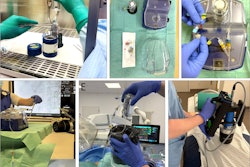
An intervention involving suspended lead suits reduces head-level radiation doses to interventional echocardiographers, suggest findings published March 11 in JAMA Network Open.
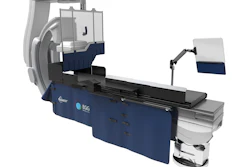
These suspended suits, which are supported overhead to eliminate weight on the operator, led to the average radiation dose being reduced to zero microsieverts (μSv), significantly less than the dose exposure from traditional lead aprons.
“These findings have important ramifications for the risk of occupational radiation exposure to interventional echocardiographers and potential shielding mechanisms during structural heart interventions,” wrote researchers led by David McNamara, MD, from the Frederik Meijer Heart and Vascular Institute at Corewell HealthWest in Grand Rapids, MI, and colleagues.
While echocardiography exams do not use radiation, interventional echocardiographers are exposed to scatter radiation during fluoroscopy-guided structural heart procedures since they are physically close to the patient. This can lead to complications down the line for the echocardiographers.
Prior studies suggest that suspended suits can help reduce exposure to interventional cardiologists during diagnostic coronary angiography and coronary interventions. These suits are made up of a 1-mm lead apron and a 0.5-mm lead equivalent transparent head and neck shield.
However, it’s not currently known whether suspended suits would work with interventional echocardiographers as well, considering frequent transesophageal echocardiography (TEE) probe manipulations and c-arm angles used during structural heart interventions. For these specialists, McNamara and co-authors tested whether using a suspended suit reduces radiation exposure compared to traditional lead apron shields during percutaneous left atrial appendage occlusion (LAAO) procedures.
The study included 125 patients with an average age of 78 who underwent LAAO. Of the total procedures, 95 were performed with a suspended lead suit worn by interventional echocardiographers. The remaining 30 cases included the use of a traditional apron.
The suspended suits led to lower radiation dose, more radiation doses being undetectable, and less exposure to more than 20 μSv.
Comparison of radiation dose to interventional echocardiographers for suspended suit, lead apron shield | |||
Measure | Traditional apron | Suspended suit | p-value |
Radiation dose | 10.6 μSv | 0.0 μSv | < 0.001 |
Undetectable radiation dose rate | 0% | 60% | < 0.001 |
Radiation doses of at least 20 μSv | 30% | 0% | < 0.001 |
Adjusted radiation doses for procedural dose area product | 0.6 μSv/Gy × cm2 | 0.0 μSv/Gy × cm2 | < 0.001 |
The study authors highlighted the public health importance of their results, writing that they could help educate interventional echocardiographers on how to protect themselves, especially with the rapid rise of transcatheter structural heart interventions throughout the U.S.
“Although the results of the present study are encouraging, future implementation and cost-effectiveness studies are needed to determine the most appropriate method to mitigate occupational radiation exposure to members of the structural heart team,” the authors wrote.
They also called for more advocacy toward radiation protection for interventional echocardiographers, as well as research into shielding techniques and implementation for structural heart procedures.
Read the full study here.