PHILADELPHIA -- Microbubbles in therapeutic ultrasound are a promising treatment method for malignant tumors, according to a presentation given May 29 at the American Institute of Ultrasound in Medicine (AIUM) annual meeting.
J. Brian Fowlkes, PhD, from the University of Michigan in Ann Arbor presented this year’s William J. Fry Memorial Lecture, named for the late ultrasound researcher who previously served as AIUM president. Fowlkes showed recent research and insights into how treating tumors with microbubbles via histotripsy can be a successful, workable interventional technique.
“Medical imaging and therapy have been influenced by the tiny bubbles harnessing their power,” said Fowlkes, another former AIUM president.
 J. Brian Fowlkes, PhD, gives the William J. Fry Memorial Lecture at AIUM 2026, speaking on how microbubbles can help treat pathologies via histotripsy and acoustic droplet vaporization.AuntMinnie
Microbubbles for medical imaging techniques such as contrast-enhanced ultrasound (CEUS) are used for cancer imaging, such as liver, kidney, and breast, to acquire blood flow information.
One method developed by researchers at Thomas Jefferson University in Philadelphia (in conjunction with GE HealthCare) is subharmonic aided pressure estimation (SHAPE). Through SHAPE, subharmonic signals from contrast microbubbles decrease with ambient pressure. This has applications in cardiovascular imaging, measuring tumor interstitial fluid pressures, and diagnosing portal hypertension via hepatic venous pressure gradients.
Fowlkes and colleagues developed a protocol using contrast microbubbles and compared this approach compared to catheter-based measuring for bladder pressure. They found that when patients perform kegels (to pressurize their bladder), subharmonic signaling from ultrasound was reduced.
“We should be able to do these types of tests in patients naturally without having to have a catheter in place,” Fowlkes said.
He added that this could also be helpful in diagnosing renal obstruction in kidneys.
At the University of Michigan, where Fowlkes is a professor of radiology and biomedical engineering, he and colleagues have been studying ultrasound’s use in diagnostic and therapeutic applications. One area of focus is acoustic droplet vaporization (ADV), where a liquid droplet is used to create phase-induced gas bubbles from acoustic waves. This transition from liquid to gas happens around one microsecond once triggered by ultrasound.
One animal study led by Fowlkes’ colleagues showed that ultrasound can control angiogenesis in acoustically responsive scaffolds that were implanted in mice. Another study to which Fowlkes contributed reviewed how ADV could be used in the future for diagnostic and therapeutic applications.
“You can see differences in the acoustic response, whether the tissue is soft or stiff, and you can see localized pressure changes,” Fowlkes said.
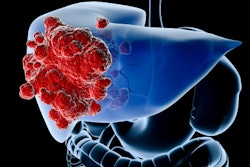
Histotripsy uses focused ultrasound waves to treat both cancerous and benign tumors. Currently, this application’s regulatory clearances are toward treating liver tumors. Unlike high-intensity focused ultrasound (HIFU), which uses heat to destroy tissue, histotripsy creates microbubbles within targeted tissues through a mechanical effect. These bubbles destroy cells by expanding and contracting, leaving little to no risk of damaging surrounding healthy tissue.
Another related technique is boiling histotripsy, which uses prolonged ultrasound pulses to create small boiling bubbles in target tissues.
A 2020 study that Fowlkes cited found that histotripsy also induces a systemic immune response in mouse models with multiple tumors.
“What you’re doing is letting the body know that there’s cancer, this is the type of cancer it is, and not only does cancer at the location of where you’re treating know it’s being treated, but similar cancers in other locations respond as well,” Fowlkes said.
He added that with this in mind, histotripsy could help reduce metastases.
Fowlkes also cited a 2022 first-in-human study conducted by colleagues at the University of Michigan that demonstrated the safety and short-term efficacy of histotripsy for liver ablation. The study included eight patients and 11 tumors and found that this approach destroyed liver tissue and correlated well with planned histotripsy volume. The authors also reported a high safety profile without any adverse events tied to the procedure.
Fowlkes is a recipient of the Joseph H. Holmes Pioneer Award for Basic Science from the AIUM. He is also a fellow of the following societies: the American Institute of Medical and Biomedical Engineering (AIMBE), the Acoustical Society of America (ASA), the American Association of Physicists in Medicine (AAPM), and the Institute of Electrical and Electronics Engineers (IEEE).
For more of AuntMinnie's coverage from AIUM 2026, click here.