L&T Technology Services (LTTS) is launching its AI-powered digital-twin platform for lung navigation, surgical planning, and respiratory diagnostics.
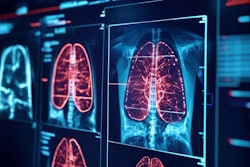
The platform integrates with CT imaging workflows and uses deep-learning models to reconstruct 3D digital twins of the lungs, enabling visualization of airways, blood vessels, lung lobes, and lesions, according to the company. It supports bronchoscopy and biopsy planning by allowing clinicians to simulate procedural pathways in a patient-specific anatomical model, LTTS said.
The new platform includes automated segmentation, volumetric analysis, and navigation path planning.
The company noted that the platform has been built on NVIDIA infrastructure, including Omniverse and OpenUSD for 3D visualization, TensorRT for AI inference, and MONAI for medical image segmentation.
No regulatory clearance has been announced yet for the platform, which debuted at RSNA in December.


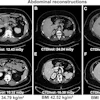




![Axial images from unenhanced calcium score cardiac CT (left) and curved planar reformation images from CT angiography (right) show that higher long-term exposure to air pollution is associated with greater coronary artery calcium and more obstructive coronary artery disease (CAD). Top row: Images in a 68-year-old male patient with higher 10-year mean ambient air pollution exposure (7.9 μg/m3 for particulate matter measuring ≤2.5 μm in diameter [PM2.5] and 17.4 parts per billion [ppb] for NO2) with extensive CAD (coronary artery calcium score [CACS] >1,000 and obstructive CAD [≥70% diameter stenosis]). Bottom row: Images in a 57-year-old female patient with lower 10-year mean ambient air pollution exposure (6.3 μg/m3 for PM2.5 and 4.6 ppb for NO2) with no CAD (CACS = 0 and no obstructive stenosis).](https://img.auntminnie.com/mindful/smg/workspaces/default/uploads/2026/06/hanneman.r6SMLzkezo.png?auto=format%2Ccompress&fit=crop&h=112&q=70&w=112)


