L & T Technology Services (LTTS) is demonstrating a next-gen AI-powered digital-twin platform in development for respiratory diagnostics and lung navigation at RSNA 2025.
The software integrates with CT imaging and leverages deep-learning models to create a 3D digital twin of lung anatomy, providing visualization of airways, blood vessels, lung lobes, and lesions.
Powered by NVIDIA MONAI for medical image segmentation and NVIDIA TensorRT for optimized AI inference, the biological digital twin enables interface visualization, precise path planning, and navigation support for bronchoscopy.

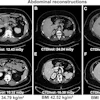




![Axial images from unenhanced calcium score cardiac CT (left) and curved planar reformation images from CT angiography (right) show that higher long-term exposure to air pollution is associated with greater coronary artery calcium and more obstructive coronary artery disease (CAD). Top row: Images in a 68-year-old male patient with higher 10-year mean ambient air pollution exposure (7.9 μg/m3 for particulate matter measuring ≤2.5 μm in diameter [PM2.5] and 17.4 parts per billion [ppb] for NO2) with extensive CAD (coronary artery calcium score [CACS] >1,000 and obstructive CAD [≥70% diameter stenosis]). Bottom row: Images in a 57-year-old female patient with lower 10-year mean ambient air pollution exposure (6.3 μg/m3 for PM2.5 and 4.6 ppb for NO2) with no CAD (CACS = 0 and no obstructive stenosis).](https://img.auntminnie.com/mindful/smg/workspaces/default/uploads/2026/06/hanneman.r6SMLzkezo.png?auto=format%2Ccompress&fit=crop&h=112&q=70&w=112)


