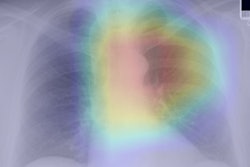
Accelerated biologic aging estimated from chest x-rays by a deep-learning model is associated with patient mortality, a large Korean study has reported.
The finding is from an analysis among 421,894 healthy individuals who underwent chest x-rays between January 2006 and December 2020, with a deep-learning model called AgeNet estimating both baseline accelerated aging and longitudinal aging velocity, noted lead authors Yoosoo Chang, MD, PhD, of Sungkyunkwan University, and Hyungjin Kim, MD, PhD, of Seoul National University, and colleagues.
“While recent studies have indicated that chest radiography-derived age can predict comorbidities, mortality, and cardiovascular outcomes, no studies have investigated the ability of aging velocity -- the rate of change in radiographic age over time -- to predict mortality,” the group wrote. The study was published April 1 in Radiology: Artificial Intelligence.
Although widely used as an indicator of aging, chronological age does not account for individual variability in the aging rate, suggesting the need for biologic age measures that reflect true aging pace and health trajectory, the authors explained.
Chest x-rays are ideal for assessing longitudinal biologic age because they are widely performed, involve minimal radiation exposure, and capture age-related changes across multiple organ systems simultaneously, the authors noted. Nonetheless, longitudinal studies using chest x-rays to assess how changes in biologic age predict age-related diseases and mortality are limited, the authors wrote.
To address the limitation, the group trained AgeNet on a dataset of 111,266 chest x-rays from 64,254 asymptomatic adults to predict chronological age from radiographic features alone. The patients were between 40 and 80 years old and had chest x-rays as part of routine health examinations.
Accelerated aging was defined as radiographic age exceeding chronological age by five or more years. Aging velocity -- calculated among 179,667 participants with three or more scans -- was categorized as the annual change in radiographic age: specifically, decelerated (less than 0.5 years per year), stable (0.5 to 1.5 years per year), or accelerated (1.5 years per year or greater).
Over a median follow-up of 8.5 years, out of the 421,894 adults, 6,506 deaths occurred, including 953 cardiovascular, 3,024 cancer, and 1,043 respiratory deaths. Baseline accelerated aging was associated with significantly higher all-cause mortality in both sexes, with adjusted hazard ratios of 1.26 in males and 1.52 in females.
In addition, compared with stable aging, decelerated aging velocity was associated with lower mortality risk (mortality rate ratios: men 0.90, p = 0.18; women, 0.50, p < 0.001), whereas accelerated velocity increased mortality risk (mortality rate ratios: men, 1.51; women, 1.71; both p < 0.001).
“Accelerated aging and aging velocity calculated from deep learning-based chest radiograph-derived biological age were independently associated with all-cause, cardiovascular, cancer, and respiratory mortality in Korean adults undergoing regular health check-ups,” the group wrote.
The study validates accelerated aging and aging velocity as accurate methods for assessing aging, which is becoming increasingly critical for improving health outcomes as the global life expectancy increases, the researchers noted.
“Such measures could guide interventions to extend the health span and reduce age-related disease risk,” the group concluded.
The full study is available here.