In Los Angeles, the "Safer at Home" quarantine order issued in response to COVID-19 resulted in a precipitous drop in radiology ordering, outpatient consultations, and emergency department, according to a study to be presented at this month's American Roentgen Ray Society (ARRS) virtual annual meeting.
A team led by Dr. Evan Raff from the Olive View-University of California, Los Angeles (UCLA) Medical Center reviewed radiology orders, indications, and appropriateness for studies in Los Angeles County's Department of Health Services following the "Safer at Home" order. He determined that total radiology orders declined by an average of 40%, outpatient volumes fell by 67%, emergency department volumes dropped by 21%, and inpatient volumes decreased by 13%.
Looking at different modalities, the biggest effects of the quarantine were observed in dual-energy x-ray absorptiometry studies and breast imaging, which had decreases of 88% and 80%, respectively. Less affected were body CT and interventional radiology, which only saw 29% and 26% declines, respectively.
Finally, emergency department visits dropped by an average of 44%, which indicates the stay-at-home order reduced use of some essential services or these visits/orders may not have been truly urgent, Raff said.
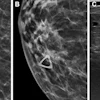
![A normal mammogram confirmed by three-year radiologic follow-up illustrates reader-marked regions of interest (ROIs) during (A) unaided (round 1) and (B) artificial intelligence (AI)–assisted (round 2) reading. Each colored dot represents an ROI for recall by a human reader. Readers could mark more than one ROI per case, represented by multiple dots of the same color. During AI-assisted reading, the AI system displayed three visible prompts: two with suspicion of malignancy scores of 35% (left mediolateral oblique [L MLO] and craniocaudal [L CC]) and one with a suspicion of malignancy score of 10% (right craniocaudal [R CC]), shown as polygonal overlays. Without AI, six of 10 readers (60%) marked a false-positive ROI. With AI assistance, this fell to two of 10 (20%). R MLO = right mediolateral oblique.](https://img.auntminnie.com/mindful/smg/workspaces/default/uploads/2026/07/2026-07-14-radiology-mammogram-ai-auto-bias.H0bYO8QlWs.jpg?auto=format%2Ccompress&fit=crop&h=100&q=70&w=100)


![A normal mammogram confirmed by three-year radiologic follow-up illustrates reader-marked regions of interest (ROIs) during (A) unaided (round 1) and (B) artificial intelligence (AI)–assisted (round 2) reading. Each colored dot represents an ROI for recall by a human reader. Readers could mark more than one ROI per case, represented by multiple dots of the same color. During AI-assisted reading, the AI system displayed three visible prompts: two with suspicion of malignancy scores of 35% (left mediolateral oblique [L MLO] and craniocaudal [L CC]) and one with a suspicion of malignancy score of 10% (right craniocaudal [R CC]), shown as polygonal overlays. Without AI, six of 10 readers (60%) marked a false-positive ROI. With AI assistance, this fell to two of 10 (20%). R MLO = right mediolateral oblique.](https://img.auntminnie.com/mindful/smg/workspaces/default/uploads/2026/07/2026-07-14-radiology-mammogram-ai-auto-bias.H0bYO8QlWs.jpg?auto=format%2Ccompress&fit=crop&h=112&q=70&w=112)