The U.S. Food and Drug Administration (FDA) has launched real-time Mammography Quality Standards Act (MQSA) reporting of adverse events at mammography facilities.
In the past, the FDA has posted a report on the Web twice per year on adverse actions taken against mammography facilities. Now, the agency plans to post actions taken against mammography facilities as soon as action has been taken.
The first event to be reported under the new practice occurred at Community Health Care in Davenport, IA. The facility terminated one of its mammography quality control (QC) technologists because it found that the technologist had falsified QC records. The FDA confirmed that this had happened and been reported to the state of Iowa; on November 29, that state's permit program suspended the technologist's x-ray permit for 180 days.
Related Reading
FDA: No. of mammo sites drops again, September 2, 2010
FDA releases new mammo standard, December 11, 2009
Number of U.S. mammo facilities drops, September 2, 2009
Report: Mammography market to continue growth, August 31, 2009
Mammography procedure volume drops 16% since 2000, March 17, 2009
Copyright © 2010 AuntMinnie.com
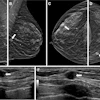
![A normal mammogram confirmed by three-year radiologic follow-up illustrates reader-marked regions of interest (ROIs) during (A) unaided (round 1) and (B) artificial intelligence (AI)–assisted (round 2) reading. Each colored dot represents an ROI for recall by a human reader. Readers could mark more than one ROI per case, represented by multiple dots of the same color. During AI-assisted reading, the AI system displayed three visible prompts: two with suspicion of malignancy scores of 35% (left mediolateral oblique [L MLO] and craniocaudal [L CC]) and one with a suspicion of malignancy score of 10% (right craniocaudal [R CC]), shown as polygonal overlays. Without AI, six of 10 readers (60%) marked a false-positive ROI. With AI assistance, this fell to two of 10 (20%). R MLO = right mediolateral oblique.](https://img.auntminnie.com/mindful/smg/workspaces/default/uploads/2026/07/2026-07-14-radiology-mammogram-ai-auto-bias.H0bYO8QlWs.jpg?auto=format%2Ccompress&fit=crop&h=100&q=70&w=100)


![A normal mammogram confirmed by three-year radiologic follow-up illustrates reader-marked regions of interest (ROIs) during (A) unaided (round 1) and (B) artificial intelligence (AI)–assisted (round 2) reading. Each colored dot represents an ROI for recall by a human reader. Readers could mark more than one ROI per case, represented by multiple dots of the same color. During AI-assisted reading, the AI system displayed three visible prompts: two with suspicion of malignancy scores of 35% (left mediolateral oblique [L MLO] and craniocaudal [L CC]) and one with a suspicion of malignancy score of 10% (right craniocaudal [R CC]), shown as polygonal overlays. Without AI, six of 10 readers (60%) marked a false-positive ROI. With AI assistance, this fell to two of 10 (20%). R MLO = right mediolateral oblique.](https://img.auntminnie.com/mindful/smg/workspaces/default/uploads/2026/07/2026-07-14-radiology-mammogram-ai-auto-bias.H0bYO8QlWs.jpg?auto=format%2Ccompress&fit=crop&h=112&q=70&w=112)