Agfa HealthCare of Greenville, SC, announced it has signed a resale agreement to market Dutch healthcare IT firm Forcare's interoperability software products as part of its Impax Data Center, which currently serves customers across Europe and North America.
The deal is designed to complement Agfa's healthcare IT portfolio with a cross-enterprise document sharing (XDS) components for health information exchange (HIE) systems that share clinical data among healthcare institutions. Impax Data Center 2.0 supports XDS with a document repository and XDS-I for imaging data. This in turn is intended to improve efficiency and reduce costs, as well as improve patient care.
The agreement enables Agfa to nonexclusively resell software products from Forcare on a global basis, and as a work-in-progress for North America.
Related Reading
Agfa, TeraRecon team up, November 24, 2010
Agfa inks CR contract with NHD, November 18, 2010
Agfa raises imaging film prices, November 15, 2010
Forcare moves to new office space, October 26, 2010
Forcare signs Dutch healthcare info exchange, February 23, 2010
Forcare to show upgrades at RSNA, November 24, 2009
Copyright © 2010 AuntMinnie.com
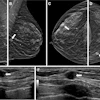
![A normal mammogram confirmed by three-year radiologic follow-up illustrates reader-marked regions of interest (ROIs) during (A) unaided (round 1) and (B) artificial intelligence (AI)–assisted (round 2) reading. Each colored dot represents an ROI for recall by a human reader. Readers could mark more than one ROI per case, represented by multiple dots of the same color. During AI-assisted reading, the AI system displayed three visible prompts: two with suspicion of malignancy scores of 35% (left mediolateral oblique [L MLO] and craniocaudal [L CC]) and one with a suspicion of malignancy score of 10% (right craniocaudal [R CC]), shown as polygonal overlays. Without AI, six of 10 readers (60%) marked a false-positive ROI. With AI assistance, this fell to two of 10 (20%). R MLO = right mediolateral oblique.](https://img.auntminnie.com/mindful/smg/workspaces/default/uploads/2026/07/2026-07-14-radiology-mammogram-ai-auto-bias.H0bYO8QlWs.jpg?auto=format%2Ccompress&fit=crop&h=100&q=70&w=100)


![A normal mammogram confirmed by three-year radiologic follow-up illustrates reader-marked regions of interest (ROIs) during (A) unaided (round 1) and (B) artificial intelligence (AI)–assisted (round 2) reading. Each colored dot represents an ROI for recall by a human reader. Readers could mark more than one ROI per case, represented by multiple dots of the same color. During AI-assisted reading, the AI system displayed three visible prompts: two with suspicion of malignancy scores of 35% (left mediolateral oblique [L MLO] and craniocaudal [L CC]) and one with a suspicion of malignancy score of 10% (right craniocaudal [R CC]), shown as polygonal overlays. Without AI, six of 10 readers (60%) marked a false-positive ROI. With AI assistance, this fell to two of 10 (20%). R MLO = right mediolateral oblique.](https://img.auntminnie.com/mindful/smg/workspaces/default/uploads/2026/07/2026-07-14-radiology-mammogram-ai-auto-bias.H0bYO8QlWs.jpg?auto=format%2Ccompress&fit=crop&h=112&q=70&w=112)