Siemens Healthcare is launching a breast cancer awareness program.
The campaign includes a Pink Ribbon Around the World initiative, which will collect and highlight photos of breast cancer patients on a special website. The images will be added to a virtual pink ribbon that will grow as more photos are added, ultimately extending around the globe, according to the Malvern, PA-based vendor.
Once the virtual ribbon has completed its international trip around the world, Siemens said it would donate 50,000 euros (approximately $69,800 U.S.) to the Susan G. Komen for the Cure organization.
Siemens said it will also perform a survey targeting women ages 25 to 65 in the U.S., Brazil, China, Germany, India, Russia, and other countries, to determine their level of knowledge concerning breast cancer and early detection. The company plans to publish the survey results in the spring of 2011 and, based on these results, will develop and distribute awareness materials specifically designed for each country.
The vendor said it has also teamed with the American Cancer Society (ACS) to sponsor a number of Making Strides Against Breast Cancer walks in U.S. cities.
Related Reading
Siemens debuts HD-Chest for PET/CT, October 8, 2010
Siemens launches MRI scanners in U.S., October 7, 2010
Siemens debuts new MammoReport, October 5, 2010
Siemens wins first U.K. contracts for syngo.via, September 16, 2010
Siemens inks U.K. service pact, August 24, 2010
Copyright © 2010 AuntMinnie.com
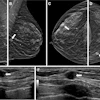
![A normal mammogram confirmed by three-year radiologic follow-up illustrates reader-marked regions of interest (ROIs) during (A) unaided (round 1) and (B) artificial intelligence (AI)–assisted (round 2) reading. Each colored dot represents an ROI for recall by a human reader. Readers could mark more than one ROI per case, represented by multiple dots of the same color. During AI-assisted reading, the AI system displayed three visible prompts: two with suspicion of malignancy scores of 35% (left mediolateral oblique [L MLO] and craniocaudal [L CC]) and one with a suspicion of malignancy score of 10% (right craniocaudal [R CC]), shown as polygonal overlays. Without AI, six of 10 readers (60%) marked a false-positive ROI. With AI assistance, this fell to two of 10 (20%). R MLO = right mediolateral oblique.](https://img.auntminnie.com/mindful/smg/workspaces/default/uploads/2026/07/2026-07-14-radiology-mammogram-ai-auto-bias.H0bYO8QlWs.jpg?auto=format%2Ccompress&fit=crop&h=100&q=70&w=100)


![A normal mammogram confirmed by three-year radiologic follow-up illustrates reader-marked regions of interest (ROIs) during (A) unaided (round 1) and (B) artificial intelligence (AI)–assisted (round 2) reading. Each colored dot represents an ROI for recall by a human reader. Readers could mark more than one ROI per case, represented by multiple dots of the same color. During AI-assisted reading, the AI system displayed three visible prompts: two with suspicion of malignancy scores of 35% (left mediolateral oblique [L MLO] and craniocaudal [L CC]) and one with a suspicion of malignancy score of 10% (right craniocaudal [R CC]), shown as polygonal overlays. Without AI, six of 10 readers (60%) marked a false-positive ROI. With AI assistance, this fell to two of 10 (20%). R MLO = right mediolateral oblique.](https://img.auntminnie.com/mindful/smg/workspaces/default/uploads/2026/07/2026-07-14-radiology-mammogram-ai-auto-bias.H0bYO8QlWs.jpg?auto=format%2Ccompress&fit=crop&h=112&q=70&w=112)