Negative effects from exchange-rate fluctuations eroded gains in operating profit for Swedish PACS and digital mammography vendor Sectra in its 2009-2010 fiscal year.
For the period (end-April 30), the Linköping-based vendor had consolidated net sales of 848.4 million Swedish kronor ($109.9 million U.S.), down 1.7% from the 863.3 million kronor ($111.8 million U.S.) reported for 2008-2009.
Sectra had operating profit of 34.2 million kronor ($4.4 million U.S.), compared with operating profit of 21.4 million kronor ($2.8 million U.S.) last year. However, net financial items of 10.7 million kronor ($1.4 million U.S.) led to profit after net financial items of 23.5 million kronor ($3 million U.S.), down from 71.4 million kronor ($9.3 million U.S.) a year ago.
President and CEO Jan-Olof Brüer noted that Sectra benefited during the year from having a significant portion of its sales derived from license revenues, service, support, upgrades, and extension and expansion of its projects for existing customers.
Sectra had fourth-quarter consolidated net sales of 255.4 million kronor ($33.1 million U.S.), down 3.1% from the 263.7 million kronor ($34.2 million U.S.) in the fourth quarter last year. Fourth-quarter profit after net financial items reached 16.6 million kronor ($2.2 million U.S.), up from 7.4 million kronor ($960,000 U.S.) a year ago.
Related Reading
Sectra lands 1st SyMRI software order, April 26, 2010
Sectra, Philips partner in Japan, April 9, 2010
Sectra granted PACS patent, March 31, 2010
Costs deflate Sectra's Q3 profit, March 16, 2010
Sectra debuts Image Central at ECR, March 4, 2010
Copyright © 2010 AuntMinnie.com
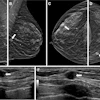
![A normal mammogram confirmed by three-year radiologic follow-up illustrates reader-marked regions of interest (ROIs) during (A) unaided (round 1) and (B) artificial intelligence (AI)–assisted (round 2) reading. Each colored dot represents an ROI for recall by a human reader. Readers could mark more than one ROI per case, represented by multiple dots of the same color. During AI-assisted reading, the AI system displayed three visible prompts: two with suspicion of malignancy scores of 35% (left mediolateral oblique [L MLO] and craniocaudal [L CC]) and one with a suspicion of malignancy score of 10% (right craniocaudal [R CC]), shown as polygonal overlays. Without AI, six of 10 readers (60%) marked a false-positive ROI. With AI assistance, this fell to two of 10 (20%). R MLO = right mediolateral oblique.](https://img.auntminnie.com/mindful/smg/workspaces/default/uploads/2026/07/2026-07-14-radiology-mammogram-ai-auto-bias.H0bYO8QlWs.jpg?auto=format%2Ccompress&fit=crop&h=100&q=70&w=100)


![A normal mammogram confirmed by three-year radiologic follow-up illustrates reader-marked regions of interest (ROIs) during (A) unaided (round 1) and (B) artificial intelligence (AI)–assisted (round 2) reading. Each colored dot represents an ROI for recall by a human reader. Readers could mark more than one ROI per case, represented by multiple dots of the same color. During AI-assisted reading, the AI system displayed three visible prompts: two with suspicion of malignancy scores of 35% (left mediolateral oblique [L MLO] and craniocaudal [L CC]) and one with a suspicion of malignancy score of 10% (right craniocaudal [R CC]), shown as polygonal overlays. Without AI, six of 10 readers (60%) marked a false-positive ROI. With AI assistance, this fell to two of 10 (20%). R MLO = right mediolateral oblique.](https://img.auntminnie.com/mindful/smg/workspaces/default/uploads/2026/07/2026-07-14-radiology-mammogram-ai-auto-bias.H0bYO8QlWs.jpg?auto=format%2Ccompress&fit=crop&h=112&q=70&w=112)