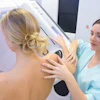
Mammography facilities in the immediate vicinity of New York City’s World Trade Center will be able to maintain their accreditation and certification, even though some personnel have been unable to complete their continuing education (CME/CEU) requirements due to circumstances related to the September 11 terrorist attacks.
The Food and Drug Administration said it is working with the American College of Radiology to help affected facilities maintain their accreditation and certification. The agency said it is aware that some mammography facility personnel have been unable to attend CME/CEU programs due to cancellations or their inability to travel to meetings.
Facilities will not be cited for failure of CME/CEU requirements if they:
• Inform the Mammography Quality Standards Act (MQSA) inspector of their situation at the time they schedule an inspection.
• Provide verification at the time of inspection that personnel scheduled to obtain the CME/CEU were unable to attend courses as a consequence of the terrorist attacks. Verification may include copies of program registrations, travel reservations, cancellation letters, or other similar documents.
• Provide a written explanation at the time of inspection as to how the facility plans for personnel to complete the CME/CEU requirements.
By AuntMinnie.com staff writersOctober 18, 2001
Related Reading
AFIP courses canceled, September 19, 2001
ABR reschedules board exams for October 18-19, September 15, 2001
Radiology board exams postponed, September 11, 2001
Copyright © 2001 AuntMinnie.com