About half of false-negative screening digital breast tomosynthesis (DBT) exams may be missed cancers, according to research published October 2 in Radiology: Imaging Cancer.
And of the false-negative exams, one-quarter were true interval cancers while another quarter were mammographically occult cancers, wrote a group led by Lars Grimm, MD, from Duke University in Durham, NC.
“False-negative cancers overall and false-negative cancers among the three false-negative cancer classifications have different biologic profiles than the general population of newly diagnosed cancers,” the Grimm team added.
With the expansion of DBT and supplemental imaging services, false-negative exam rates may have changed from older 2D mammography-based findings. The researchers also noted that classification of false-negative causes is subject to observer variability, since visibility at mammography depends on reader interpretation.
Grimm and colleagues performed an internal audit of false-negative screening DBT exams in their institution, with the goal of classifying their respective causes and pathologic characteristics. They focused on false-negative exams collected between 2019 and 2023.
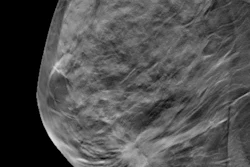
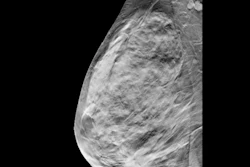
 Interval cancer in a 73-year-old female patient. (A) Screening digital breast tomosynthesis image shows no evidence of cancer. (B) Diagnostic DBT image reveals a new mass 11 months later, after the patient presented with a palpable lump. (C) The corresponding ultrasound image helped confirm the mass, which was biopsied as grade 3 invasive ductal carcinoma.RSNA
Seven fellowship-trained breast radiologists independently reviewed the false-negative screening and diagnostic mammograms preceding biopsy. They recorded cancers as visible or not visible. They also classified cancers either mammographically occult, missed, or true interval cancers.
The study included data from 117 women with a median age of 60 years who had false-negative exams. Of the cancers recorded, 88 manifested symptomatically a median of 237 days post-exam.
Among the total cancers, 47.9% were missed, 26.5% were mammographically occult, and 25.6% were true interval cancers.
True interval cancers were more often estrogen receptor–negative (50.0%) and progesterone receptor–negative (66.7%) compared to the other classified cancers.
Mammographically occult cancers meanwhile were more often stage T0 (32.3%) and detected at MRI (48.4%). These cancers also more often developed in younger women (51 years, p < 0.05) than missed (62 years) and true interval cancers (59 years).
The results suggest that providing benchmarks on the causes of false-negative mammograms “can help in the development of quality improvement and educational efforts to improve interpretive performance,” the study authors wrote.
The results could also encourage other breast imaging practices to share their audit experience and consider developing these new benchmarks, according to an accompanying editorial by Fatima Elahi, DO, from Henry Ford Health in Detroit, MI, and Priscilla Slanetz, MD, from Dartmouth College in Hanover, NH.
“Given the range of contributing factors, annual review of such cases provides an opportunity to improve patient care by eliminating or at least mitigating system-level issues and helping the imaging team enhance their technical and interpretive skills,” Elahi and Slanetz wrote.
Read the full study here.