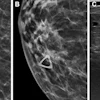
A study of over 93,000 women found that digital breast tomosynthesis (DBT) screening performs better in older women, with higher cancer detection rates and lower false positive rates compared to younger age groups, suggesting that age alone should not be used to limit screening eligibility.
- Cancer detection rates with DBT increased from 2.9 per 1,000 exams in women ages 40-49 to 10.6 per 1,000 exams in women ages 80 and older
- DBT sensitivity improved from 72.5% in ages 40-49 to 91.7% in ages 70-79, with specificity reaching 95.5% in women 80 and older
- Abnormal interpretation rates decreased with age, from 9.3% in younger women to 5.5% in women 80 and older
- The study challenges current age-based screening cutoffs, with some guidelines recommending screening cessation at age 74
- Researchers recommend individualized, risk-adapted screening strategies that consider health status rather than age alone
Screening digital breast tomosynthesis (DBT) yields higher performance with advancing patient age, according to findings published October 23 in Radiology: Imaging Cancer.
DBT led to higher cancer detection rates and lower abnormal interpretation rates in older women in a study over 93,000 women led by Leslie Lamb, MD, and colleagues from Massachusetts General Hospital in Boston.
“These findings provide a contemporary benchmark for screening DBT performance across age groups and contribute to the ongoing reassessment of age-based screening guidelines,” Lamb et al wrote.
Medical societies and governing bodies differ in their respective recommended screening intervals and upper age limits. However, some leading experts are calling for more age-specific data to inform evidence-based screening recommendations.
While prior research has outlined the potential harms of screening women at ages 75 and older with conventional 2D mammography, Lamb and colleagues noted that data are limited on DBT’s performance across age groups.
The Lamb team added to the literature with this focus in mind, using retrospective data collected between 2013 and 2019. The study included data from 93,617 women who underwent 302,700 DBT exams. Each exam included combined digital 2D mammography and DBT. The team categorized exams as true positive, false positive, true negative, or false negative based on one-year follow-up.
DBT performance gradually improved with age. This included a higher cancer detection rate, sensitivity, and specificity for women ages 70 to 70 years compared to those ages 40 to 49 years. In older women, screening DBT also led to a lower abnormal interpretation rate.
Performance of screening DBT across patient age groups | |||||
Measure | Ages 40 to 49 | Ages 50 to 59 | Ages 60 to 69 | Ages 70 to 79 | Ages 80 and over |
Cancer detection rate (per 1,000 exams) | 2.9 | 4.2 | 6.5 | 8.3 | 10.6 |
Sensitivity | 72.5% | 82.5% | 90.4% | 91.7% | 88.2% |
Specificity | 91.0% | 94.0% | 94.9% | 95.1% | 95.5% |
Positive predictive value | 3.2% | 6.5% | 11.3% | 14.4% | 19.2% |
Abnormal interpretation rate | 9.3% | 6.4% | 5.7% | 5.7% | 5.5% |
*Results achieved statistical significance when comparing the 70 to 79 age group to the 40 to 49 age group.
The results point to the limitations of age-based breast cancer screening models, with some U.S. guidelines recommending a cutoff age of 74 years, the researchers highlighted. They added that the study highlights “the need for individualized, risk-adapted screening strategies that consider both health status and imaging performance.”
The team called for future research to integrate individual risk prediction tools, including AI-based models derived from screening mammography. It wrote that this research could help determine the best personalized screening intervals, supplemental imaging strategies, and screening cessation decisions.
The study provides a benchmark for DBT performance across adulthood, according to an accompanying editorial written by Shahid Hussain, MBBS, from Combined Military Hospital Rawalpindi in Pakistan.
Hussain wrote that the results show how age alone does not negatively affect screening performance and “should not serve as a surrogate for health status or life expectancy.”
“The more useful question is therefore not simply ‘How old is the patient?’ but ‘Is this patient likely to benefit from screening, and can we make that decision using individualized risk and health information?’” he added.
Read the full study here.