
An AI system trained on more than 13,000 cardiac MRI exams demonstrates accuracy rates as high as 99% for certain heart conditions and beats existing general-purpose models by up to 35%, researchers have reported.
The findings could improve radiology workflow, according to a team led by co-principal investigator and corresponding author David Chen, PhD, of the Cleveland Clinic. The study was published May 21 in Nature Communications.
"Cardiac MRI interpretation is highly specialized and time intensive," Chen said in a statement released by the journal. "Systems like [this AI algorithm] have the potential to support clinicians through automated screening, and interpretation support, particularly in settings where expert readers are limited."
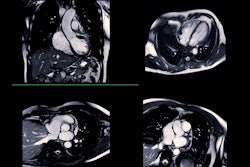
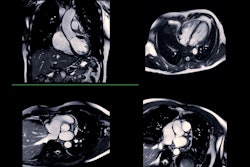
Cardiac MRI (CMR) is a "powerful but complex advanced cardiac imaging modality," the group explained, "able to visualize cardiac morphology, function, viability, tissue characteristics, and flow within a single exam, and thus serve as the "definitive diagnostic modality for several cardiac diseases including valvular pathologies, cardiomyopathies, pericardial disease, and aortic diseases."
Yet cardiac MRI studies include hundreds to thousands of images across multiple views and time points, making interpretation time-consuming even for trained specialists -- a complexity exacerbated even more by the fact that the supply of experts available to meet growing clinical demand is limited, the group noted.
Chen and colleagues assessed the performance of an AI system called CMR-CLIP that could streamline cardiac MRI exam interpretation by integrating radiology report findings with the algorithm to connect moving images of the heart. The research included 14,214 paired CMR studies and reports from 12,500 patients from between 2008 and 2023; the model was trained with more than a million images and hundreds of thousands of motion sequences collected over more than a decade.
The overall finding was that, when tested, CMR-CLIP identified cardiac conditions in a "zero-shot" setting -- which means it was not directly trained on specific labels but was able to match images to prompts such as "enlarged left ventricle."
They also reported the following:
- On average, for the CMR findings task, CMR-CLIP outperformed the more general OpenAI CLIP by 45.5% in the zero-shot setting.
- For specialized diagnostic tasks, the model reached "near-clinical levels" of performance, with accuracy rates as high as 99% for certain heart conditions.
- The model was able to search through large databases of scans using natural language and match similar cases in a way that could help clinicians compare patients with rare or complex presentations.
Even better, the team found that the model showed strong performance when it was used with two separate databases, "suggesting it could generalize beyond a single hospital system."
"The potential applications of this framework are many-fold and far-reaching, including applications in content-based information retrieval, clinical decision support, and healthcare operations," the authors concluded. "We believe that it represents a significant step forward in the field of medical image analysis and clinical decision-making for CMR."
Access the full study here.

.fFmgij6Hin.png?auto=compress%2Cformat&fit=crop&h=100&q=70&w=100)
.fFmgij6Hin.png?auto=compress%2Cformat&fit=crop&h=167&q=70&w=250)


