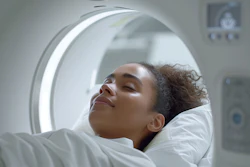
Episode 11 of "The Invisible Force" podcast on the AuntMinnie Podcast Network focuses on MRI safety standards and accreditation. It provides a starting checklist for imaging center team conversations around MR policies and practices. It also educates MRI consumers.
Hosts and MRI safety educators Tobias "Toby" Gilk and John Posh began emphasizing and guiding MRI safety standards long before the July 2025 MRI incident after which Keith McAllister died. Episode 11 raises practical questions applicable to MRI centers and that should also be of interest to their managing directors and executives.
- Does the MRI center have people appointed to MRI safety-specific roles?
- How often do you look at how people are getting hurt in MRI?
- How often do you look at MRI safety events and evaluate whether your standards are specific or concrete enough that if they were followed would interrupt those injury accidents?
"The things we think are going to guarantee quality and safety, well, they don't always work the way we would expect when it comes to MRI," Gilk notes at the outset. "The first thing that we advise you to not take as a good indicator of safety is how confident and reassuring the MRI department staff is." The episode explains.
Key to the MRI exam preparation process, as all MRI personnel know, is the all-important MRI screening prior to imaging.
"If you're nervous about the exam and your imaging provider has an online option for you to complete the screening form, do it at least a day before the exam or whatever instructions they give you," Posh advises those planning MRI. "It is vitally important that you answer their questions fully, even if the information would make you embarrassed." Err on the side of oversharing as opposed to undersharing, Posh emphasized.
For both imaging center teams and patients, Episode 11 provides a basic understanding of MRI safety supervisory roles and how they vary in practice. For example, the role of magnetic resonance safety officer (MRSO) is usually filled by a more experienced MRI technologist.
"[MRSO] will probably have the most impact on what you see happening when you enter the MRI facility," Gilk explained. "One of the best indications of a site that takes MRI safety seriously is one that has people appointed to MRI safety-specific roles."
Listen for how the appointments of MRSO and two other key positions -- the MR medical director (MRMD) and MR safety expert (MRSE) -- affect MRI operations and safety overall.
The information in this episode is important for both MR professionals and patients, especially those who have highly complex MRI safety situations due to implants or other objects in their body, who require a specially adapted MRI exam to help protect their safety.
In particular, Gilk recommended that people with a pacemaker or neurostimulator -- any device called a stimulator -- undergo MRI at a hospital as opposed to an outpatient imaging center.
"Similarly, if you've got a complicated medical history with different implants or devices or prosthetics, evaluating you or a loved one as an MRI patient will be more complicated and demanding," Posh said, acknowledging that imaging center choice may depend on insurance coverage.
"We also want to make clear that our preferences for hospital providers over outpatient imaging centers are based on general national capabilities," Gilk said.
For MRI safety personnel, Gilk and Posh further highlight a handful of entities that contribute to MRI safety status. One path is certification by the International Board of Magnetic Resonance Safety (IBMRS), formerly the American Board of Magnetic Resonance Safety (ABMRS).
The American Registry of Radiologic Technologists (ARRT)'s new certification program for imaging assistants or MR tech aides is also notable, according to Posh, who suggested that radiographers IA-certified as part of the ARRT's program will "have more MRI safety training than MRI techs and are required to have more MRI safety-specific continuing education than MRI techs."
According to Gilk and Posh, positive signs the MRI facility is safety conscious include the following:
- The MRI control room area is locked off from the rest of the radiology department.
- Staff wears ID badges identifying the appropriate modality, in this case, MRI.
- Any equipment in the vicinity of the MRI room is clearly labeled with conspicuous markings indicating safety in MRI.
Ultimately, MRI safety policies must be strong and adhered to strongly, Gilk and Posh stressed. According to the experts, some accreditation organizations have varied approaches, and they discuss these during the second half of the show. Listen now.
Host
Tobias "Toby" Gilk is the founder of Gilk Radiology Consulting. An architect by training, he has spent over 20 years focusing on MRI safety, initially through the architecture and planning of MRI facilities, but growing into the technology, clinical practice, regulation, and economics of MRI safety. Gilk holds both MR Safety Officer (MRSO) and MR Safety Expert (MRSE) certifications from the American Board of Magnetic Resonance Safety (ABMRS). An evaluator of serious reportable events (SRE), he is also a volunteer member of the Technical Expert Panel (TEP) of the National Quality Forum, and co-author of "The Technologist MRI Safety Handbook."
Co-host
John Posh is an MRI educator, safety consultant, and safety auditor with over 35 years of experience in the field of MRI safety and education, working with outpatient facilities, hospitals, and universities. He owns Posh Education in Bethlehem, PA, and currently serves as global director of education and training for Aspect Imaging, chief academic officer-MRI at John Patrick University, and adjunct professor of medical imaging at Rush University.
This episode of "The Invisible Force" is brought to you by AuntMinnie and the AuntMinnie Podcast Network. You can also find it on Apple Podcasts and Spotify. Check out AuntMinnie's full podcast library, including extras, on Apple Podcasts and Spotify.