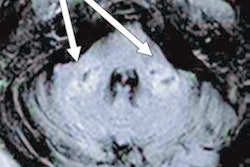
Medical device manufacturer Rhythmlink International said that its MR-conditional Sticky Pad surface electrodes have received U.S. Food and Drug Administration (FDA) clearance.
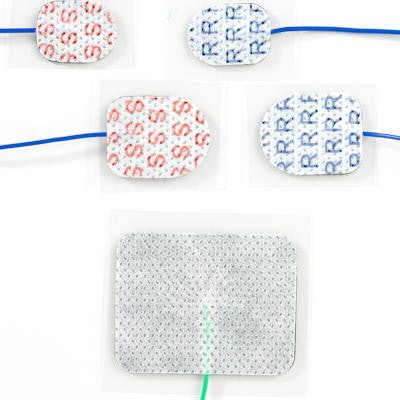
Rhythmlink's MR Conditional Sticky Pads are specially designed for stimulating, recording, or grounding. Image courtesy of Rhythmlink.As a result, the three varieties of the peel-and-stick electrodes can be utilized when patients need 1.5-tesla or 3-tesla MRI scans during intraoperative neurophysiological monitoring and electroencephalography surgeries, according to the vendor. The electrodes, which feature a self-adhesive hydrogel design, are each designed to provide either stimulating, grounding, or recording functionality, RhythmLink said.
All Sticky Pad electrodes can also be used during CT exams.



![Overview of the study design. (A) The fully automated deep learning framework was developed to estimate body composition (BC) (defined as subcutaneous adipose tissue [SAT] in liters; visceral adipose tissue [VAT] in liters; skeletal muscle [SM] in liters; SM fat fraction [SMFF] as a percentage; and intramuscular adipose tissue [IMAT] in deciliters) from MRI. The fully automated framework comprised one model (model 1) to quantify different BC measures (SAT, VAT, SM, SMFF, and IMAT) as three-dimensional (3D) measures from whole-body MRI scans. The second model (model 2) was trained to identify standardized anatomic landmarks along the craniocaudal body axis (z coordinate field), which allowed for subdividing the whole-body measures into different subregions typically examined on clinical routine MRI scans (chest, abdomen, and pelvis). (B) BC was quantified from whole-body MRI in over 66,000 individuals from two large population-based cohort studies, the UK Biobank (UKB) (36,317 individuals) and the German National Cohort (NAKO) (30,291 individuals). Bar graphs show age distribution by sex and cohort. BMI = body mass index. (C) After the performance assessment of the fully automated framework, the change in BC measures, distributions, and profiles across age decades were investigated. Age-, sex-, and height-adjusted body composition reference curves were calculated and made publicly available in a web-based z-score calculator (https://circ-ml.github.io).](https://img.auntminnie.com/mindful/smg/workspaces/default/uploads/2026/05/body-comp.XgAjTfPj1W.jpg?auto=format%2Ccompress&fit=crop&h=112&q=70&w=112)