An imaging center in Jacksonville, FL, was shut down for one day last week when a handgun was pulled inside an MRI machine by its magnet.
Jacksonville TV station WJTX reported that an off-duty Jacksonville Sheriff's Office deputy was hurt on September 30 when her hand was trapped between the police-issued Glock handgun and the magnet.
According to the report, Joy Smith was in the MRI room at Beaches Open MRI when she apparently forgot about her gun, which was pulled into the machine, trapping her hand between the gun and the scanner.
Smith freed herself, but the gun remained stuck for hours while the machine was powered down.
Beaches Open MRI closed for the rest of the day and an MRI technician had to be flown in to fix the machine. WJTX estimated that the downtime cost the center $150,000. The facility, which handles more than 30 patients a day, reopened the next day.
Related Reading
Rise in MRI accidents highlights need for magnet safety, August 11, 2009
Survey: MRI centers lack infection control, May 28, 2009
FDA warns of sandbags in MRI suites, April 3, 2009
U.S. FDA warns against wearing skin patch during MRI, March 6, 2009
Joint Commission may survey for MRI safety, March 5, 2009
Copyright © 2009 AuntMinnie.com
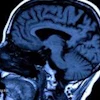


![Overview of the study design. (A) The fully automated deep learning framework was developed to estimate body composition (BC) (defined as subcutaneous adipose tissue [SAT] in liters; visceral adipose tissue [VAT] in liters; skeletal muscle [SM] in liters; SM fat fraction [SMFF] as a percentage; and intramuscular adipose tissue [IMAT] in deciliters) from MRI. The fully automated framework comprised one model (model 1) to quantify different BC measures (SAT, VAT, SM, SMFF, and IMAT) as three-dimensional (3D) measures from whole-body MRI scans. The second model (model 2) was trained to identify standardized anatomic landmarks along the craniocaudal body axis (z coordinate field), which allowed for subdividing the whole-body measures into different subregions typically examined on clinical routine MRI scans (chest, abdomen, and pelvis). (B) BC was quantified from whole-body MRI in over 66,000 individuals from two large population-based cohort studies, the UK Biobank (UKB) (36,317 individuals) and the German National Cohort (NAKO) (30,291 individuals). Bar graphs show age distribution by sex and cohort. BMI = body mass index. (C) After the performance assessment of the fully automated framework, the change in BC measures, distributions, and profiles across age decades were investigated. Age-, sex-, and height-adjusted body composition reference curves were calculated and made publicly available in a web-based z-score calculator (https://circ-ml.github.io).](https://img.auntminnie.com/mindful/smg/workspaces/default/uploads/2026/05/body-comp.XgAjTfPj1W.jpg?auto=format%2Ccompress&fit=crop&h=112&q=70&w=112)