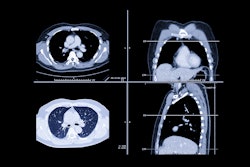
A CT-based deep learning model can identify individuals with clinical stage IA non–small cell lung cancer (NSCLC) at high risk of further disease, researchers have found.
A model developed by a team led by Kwon Joong Na, MD, of Seoul National University Hospital and College of Medicine in South Korea demonstrated an area under the receiver operating curve (AUC) of 0.86 for predicting recurrence of disease at two-years post procedure. The group's results were published April 16 in Radiology.
Lobectomy has traditionally been the standard approach for treating early-stage lung cancer, but new research has suggested that sublobar resection could be an effective alternative, the authors noted. Yet there are currently no tools for assessing risk of further disease in patients undergoing segmentectomy for NSCLC, they explained.
"Recent clinical trials have shown that for small peripheral non-small cell lung cancer (NSCLC) tumors, sublobar resection might be as effective as lobectomy, with similar survival rates," they wrote. "However, further risk stratification in patients undergoing segmentectomy is currently limited."
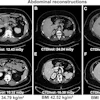
To address the problem, Na's group developed and validated a deep-learning model using data from preoperative CT scans and clinical and radiologic information for risk stratification in patients with clinical stage IA NSCLC (tumors 3 cm or less) who underwent segmentectomy from January 2010 to December 2017. The team analyzed the model's performance using area under the receiver operating characteristic curve (AUC), sensitivity, specificity for freedom from recurrence at two and four years, and lung cancer-specific survival and overall survival at four and six years. It also compared the model's sensitivity and specificity with the Japan Clinical Oncology Group (JCOG) eligibility criteria for sublobar resection.
The team found the following:
| Performance of a CT-based deep learning model for predicting risk of further disease in patients undergoing segmentectomy for NSCLC | |
|---|---|
| Measure | Freedom from recurrence at 2 years post procedure |
| AUC | 0.86 |
| Sensitivity | 87.4% |
| Specificity | 66.7% |
In addition, the investigators reported that the model demonstrated higher sensitivity for freedom from recurrence than the JCOG criteria, at 87.4% compared with 37.6% (p = 0.02) -- and similar specificity.
"[The] CT-based deep-learning model identified patients at high risk among those with clinical stage IA non-small cell lung cancer who underwent segmentectomy, demonstrating higher sensitivity for recurrence and/or death compared with clinical trial eligibility criteria for sublobar resection," they concluded.
The complete study can be found here.