In response to an April 14 study that suggests CT scans are linked to new cases of cancer, the American Association of Physicists in Medicine (AAPM) is countering that the benefits of CT exams far outweigh the risk of radiation exposure.
The methods used by a team led by Rebecca Smith-Bindman, MD, of the University of California, San Francisco, are fundamentally statistical in nature and carry a large amount of uncertainty, the organization noted in a news release.
"They provide no direct evidence of any person getting cancer from a CT scan," said Cynthia McCollough, PhD, a CT imaging expert and past president of the AAPM, in the association's statement. "The authors' estimates also assume that the risk from a CT scan is the same for a sick person getting a CT scan as it is for a healthy person getting a CT. Rather, any risk from a CT scan of a sick patient is likely much less than the risk of the underlying disease."
Ultimately, CT plays a huge role in diagnosing and treating cancer patients, the AAPM noted. Screening for lung cancer with CT imaging has increased survival rates, for instance, with a large national trial finding a 20% decrease in lung cancer deaths among smokers and ex-smokers who received low-dose CT lung scans compared with those who had only a chest x-ray.
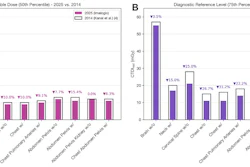
Moreover, advances in CT technology and radiation optimization have reduced the radiation dose of a CT scan by 20% between 2006 and 2016, noted Mahadevappa Mahesh, PhD, current president of the AAPM.
“Imaging professionals, including medical physicists, take great care to use only the amount of radiation needed to answer the clinical question, and patients should feel safe proceeding with a medically needed CT exam,” he said.
The AAPM recommends that patients with concerns about CT exams ask their doctors if the results of an ordered CT will help determine their diagnosis or treatment plan. If the answer is yes, it is safest to proceed with the CT exam, the AAPM noted.