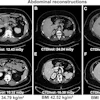
CT imaging may offer a better picture of fracture risk than conventional bone mineral density (BMD) measurements in people with diabetes, researchers have reported.
"[Our] findings suggest that conventional BMD measurements may not fully capture the well-known fracture risk in diabetes," wrote a team led by Elena Ghotbi, MD, of Johns Hopkins University in Baltimore. The group's results were published July 29 in Skeletal Radiology.
Bone mineral density assessment helps clinicians predict patients' fracture risk, and in general, increased BMD suggests lower risk. But high BMD readings on imaging can also indicate conditions such as osteoarthritis rather than healthy bone.
Ghotbi and colleagues explored the question of whether CT imaging offers a more accurate estimation of bone density in people with diabetes via a study that investigated the longitudinal association between the disease and changes in vertebral BMD derived from chest CT results.
The study included 1,046 individuals from the Multi-Ethnic Study of Atherosclerosis (MESA) Lung Study with vertebral BMD measurements from chest CTs from two different time periods: 2010 to 2012 and 2016 to 2018. The investigators classified diabetes based on American Diabetes Association criteria; those with impaired fasting glucose (that is, prediabetes) were excluded. They calculated volumetric BMD using a deep-learning model to segment trabecular bone of thoracic vertebrae results from CT imaging and used linear mixed-effects models to estimate any association between diabetes and BMD changes over time.
The authors found that patients with diabetes had a higher baseline vertebral BMD than those without (202 versus 190 mg/cm3) and experienced a significant increase over a median follow-up of 6.2 years. The increase was more pronounced among those with diabetes and reduced kidney function compared with those with diabetes alone (beta = 1.52 mg/cm3/year compared with beta = 0.48 mg/cm3/year).
More research is needed, according to the group.
"Further studies incorporating bone microarchitecture using advanced imaging and fracture outcomes are needed to refine skeletal health assessments in the diabetic population," it concluded.
The complete study can be found here.