The American College of Radiology (ACR) has released a new version of its Liver Imaging Reporting and Data System (LI-RADS): CT/MRI LI-RADS v2018.
The new version of CT/MRI LI-RADS features two minor changes that enable it to be integrated into the American Association for the Study of Liver Diseases (AASLD) 2018 hepatocellular carcinoma (HCC) clinical practice guidance, according to the ACR.
LI-RADS v2018 revises the definition of the LI-RADS major feature threshold growth and revises one LI-RADS category 5 criterion (10-19 mm + arterial phase hyperenhancement + "washout" = LR-5). The ACR said it intends to return now to a three- to four-year update cycle for CT/MRI LI-RADS, with the next major comprehensive update anticipated in 2021.

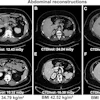


![Images show the pectoralis muscles of a healthy male individual who never smoked (age, 66 years; height, 178 cm; body mass index [BMI, calculated as weight in kilograms divided by height in meters squared], 28.4; number of cigarette pack-years, 0; forced expiratory volume in 1 second [FEV1], 97.6% predicted; FEV1: forced vital capacity [FVC] ratio, 0.71; pectoralis muscle area [PMA], 59.4 cm2; pectoralis muscle volume [PMV], 764 cm3) and a male individual with a smoking history and chronic obstructive pulmonary disorder (COPD) (age, 66 years; height, 178 cm; BMI, 27.5; number of cigarette pack-years, 43.2, FEV1, 48% predicted; FEV1:FVC, 0.56; PMA, 35 cm2; PMV, 480.8 cm3) from the Canadian Cohort Obstructive Lung Disease (i.e., CanCOLD) study. The CT image is shown in the axial plane. The PMV is automatically extracted using the developed deep learning model and overlayed onto the lungs for visual clarity.](https://img.auntminnie.com/mindful/smg/workspaces/default/uploads/2026/03/genkin.25LqljVF0y.jpg?auto=format%2Ccompress&crop=focalpoint&fit=crop&h=112&q=70&w=112)


