Dear AuntMinnie Member,
Medical imaging has become a crucial tool in managing acute stroke patients. Technologies like CT and MRI have developed indispensable roles in determining the course of treatment during the "golden hour," when at-risk brain tissue can be saved by the accurate administration of therapy.
But imaging's role in stroke diagnosis and treatment is still evolving, and that's the subject of a new series on stroke imaging we're featuring this week in our CT Digital Community by staff writer Eric Barnes.
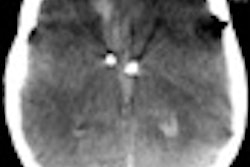
In part I of the series, we examine the role of imaging in identifying brain tissue that can be salvaged through early and effective treatment. Part of the problem is that, despite recent advancements, medical imaging is still limited to simplistic representations of brain physiology.
Even some of the terms imaging specialists use to describe at-risk brain tissue -- such as the term "penumbra" -- aren't completely accurate. Learn more about the current state of the art in stroke imaging by clicking here.
We'll be running part II of this series in our next CT Insider newsletter, so make sure you're signed up to get it. To register as a CT Insider (or for any of our other Insider newsletters), just click on the "Newsletters" link at the top of any AuntMinnie Web page when you're logged in. The link will take you to a page where you can manage your AuntMinnie newsletters just by checking the boxes beside each one.
In other stroke-related news in the community, we're featuring a study by Italian researchers who improved the prognostic value of a predictive tool for classifying stroke risk by adding CT data to it. Learn how they did it by clicking here.
Get these stories and more in our CT Digital Community at ct.auntminnie.com.