PITTSBURGH – CT angiography (CTA) is often the best test for diagnosing sudden coronary artery dissection (SCAD), according to a talk given April 13 at ARRS 2026.
 Brian Ghoshhajra, MD, presents the case for CT angiography (CTA) as an optimal imaging test for sudden coronary artery dissection (SCAD) at ARRS 2026.
In his presentation, Brian Ghoshhajra, MD, from Massachusetts General Hospital in Boston, outlined how CT imaging may have a key role in diagnosing this condition in cardiac patients.
“I’m going to argue that CTA may occasionally or often be the best test for a SCAD diagnosis,” Ghoshhajra said. “[SCAD] is not a zebra. It’s been out there all along.”
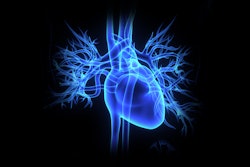
SCAD occurs when a tear forms in a wall of a heart artery. Characteristics on CTA imaging include the following: lack of atherosclerotic plaque, tapered luminal stenosis, abrupt luminal stenosis, luminal occlusion, intramural hematoma, dissection flap, and perivascular epicardial fat stranding.
Prior research suggests that SCAD prevalence ranges between 0.1% and 4% of all acute coronary syndrome presentations. SCAD also makes up a larger percentage of myocardial infarction in women younger than the age of 50 years, between 24% and 40% of cases.
Ghoshhajra cited earlier studies showing CTA’s overall efficacy in cardiac imaging.
“The data that backs this up is undeniable,” he said. “You can do this in emergency patients and it’s three times as fast to do a CTA. It’s safe to do a coronary syndrome rule-out with CTA.”
Ghoshhajra said CTA may be the best option for initial evaluation, workup of new diagnoses, and clarifying suspected diagnoses. However, he also noted the lack of data on imaging SCAD, including no randomized controlled trials or dedicated studies of CCTA in the setting of acute SCAD cases.
“We’ve probably done 500 cases in the past decade or so as we become more aware of it [SCAD],” Ghoshhajra said.
However, he cited two studies that were published in 2026. One study showed that coronary CTA (CCTA) use for SCAD diagnosis increased between 2017 and 2022 from 1.4% to 2.1%. They also demonstrated that patients who undergo CCTA are younger than those who undergo invasive coronary angiography (ICA) and that Black patients more often undergo CCTA.
The other study found that late enhancement imaging with photon-counting detector CT (PCD-CT) showed strong agreement with cardiac MRI for detecting myocardial injury in SCAD. This study, however, included just 17 patients.
Ghoshhajra also noted that normal results on CT do not exclude SCAD and that CTA should be used carefully and interpreted “with great caution.” He added that base CAD-RADS does not cover SCAD.
“The SCAD coronary appearance on CTA differs from that of atherosclerosis,” he said. “I think that’s where our sweet spot is. The lack of atherosclerosis could be our biggest clue.”
Clinicians should also be ready for all coronary and cardiac diagnoses, even in the emergency department, Ghoshhajra said.
“If you scan enough patients, you’re going to find all the corner cases, whether it’s spontaneous dissection or anomalous aortic origin of coronary arteries … all kinds of other reasons for elevated troponin or just chest pain that might get an image,” he said.