A new research initiative led by the Initiative Advancing Women's Health and the Washington Research Foundation is creating a standardized clinical protocol for managing breast arterial calcification (BAC) found on mammograms, aiming to improve cardiovascular risk assessment and care coordination for women since BAC appears in 10-15% of mammograms but is rarely reported or followed up.
- BAC prevalence: Breast arterial calcification appears in 10-15% of mammograms but is not routinely reported or recommended for follow-up care.
- Cardiovascular connection: BAC on mammography is tied to cardiovascular disease risk in women, yet most findings go unaddressed.
- Policy progress: Only Maryland currently requires breast imaging centers to notify patients of BAC findings, with the law taking effect October 1.
- Initiative goals: InAWH and Washington Research Foundation are standardizing BAC reporting, developing clinical protocols for radiologists and primary care physicians, and proposing legislation at state and federal levels.
- AI potential: Recent research shows artificial intelligence could help predict cardiovascular disease risk in women by analyzing BAC on mammography.
A new research initiative aims to create a recommended protocol for clinicians to follow once breast arterial calcification (BAC) is found on mammography.
The Initiative Advancing Women’s Health (InAWH) and the Washington Research Foundation are co-funding research via Ask. Know. Act., a campaign designed to create a clear next step for women with BAC to have their heart health evaluated.
“Women need to know what to ask, doctors need to know how to answer, and the system needs to know what to do next. We call it ‘Ask. Know. Act.’” said Paula Schneider, CEO of InAWH. “And we're kicking off that campaign… with an initiative intended to close the gap between what’s known and what’s done for women now and for the generations who come next, starting with BAC.”
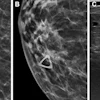
The presence of BAC on mammography is tied to cardiovascular disease risk in women. BAC appears in 10% to 15% of mammograms, but this imaging finding is not routinely reported or recommended for follow-up. Prior research suggests collaboration is needed between breast radiologists and cardiologists for women to get their proper care.
Studies have also shown how AI could help in this area. Recent research suggests that AI could help predict CVD risk in women from BAC on mammography.
Despite the connection, legislation has been slow in mandating BAC reporting, similar to breast density notification laws on the federal and state levels. Only Maryland requires breast imaging centers to tell patients when their scans show BAC. This law took effect on October 1.
“This is a perfect example of how the healthcare system is broken for women in midlife,” Schneider said. “Schneider previously served as president and CEO of Susan G. Komen.
The InAWH is a global nonprofit focused on addressing knowledge gaps in women’s midlife health, as well as how care is delivered. Current work by the organization includes educational work to help women understand what BAC is and encouraging them to ask about it.
Organization leaders through this co-funded initiative with the Washington Research Foundation are working to help hospitals and providers put BAC reporting into practice. This includes standardizing reporting and developing clear clinical protocols for radiologists, primary care physicians, and OB-GYNs.
On the policy side, the two organizations are also developing proposed legislation at the state and federal levels. This includes working with the U.S. Food and Drug Administration (FDA) and the U.S. Centers for Medicare and Medicaid Services (CMS) on quality standards.
The InAWH on October 9 hosted its inaugural convening leading women’s health researchers and advocates to launch the initiative. Speakers presented on research gaps in BAC, menopause, women’s health in low- and middle-income countries, and how AI could help further address these gaps.
“Every woman who gets a mammogram is already carrying information about her heart,” said Orin Levein, CEO of the Washington Research Foundation, in a prepared statement. “This one simple reading shows how much we can gain just by using information we already have. We need a clear, consistent way to report it and a plan for what happens next.”