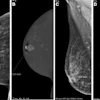
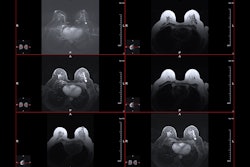
A new study published in JAMA Network Open found that breast MRI screening detects early-stage cancers more effectively than mammography in high-risk women, though it does not reduce advanced cancer rates. Researchers recommend that women at elevated risk for breast cancer discuss MRI screening options with their physician.
- Screening MRI detected significantly more early-stage cancers than mammography in high-risk women (10.3 per 1,000 exams vs. 2.8 per 1,000 exams)
- Advanced cancer rates were similar between MRI and mammography (0.8 vs. 0.6 per 1,000 exams in high-risk groups)
- MRI screening had higher false-positive biopsy rates than mammography (94.0 vs. 18.1 per 1,000 exams)
- Study included 172,865 imaging exams from 105,532 women ages 40-74 performed between 2005-2021
- Subsequent MRI screenings showed lower advanced cancer rates than first-time MRI screening (0.4 vs. 2.0 per 1,000 exams)
Screening MRI could be a workable option for women at advanced risk for breast cancer, according to research published November 6 in JAMA Network Open.
MRI screening led to higher screen-detected early-stage cancer rates compared with mammography, but not lower advanced cancer rates, wrote researchers led by Karla Kerlikowske, MD, from the San Francisco Veterans Affairs Medical Center in California.
“These results suggest that women with elevated advanced cancer risk undergoing mammography should discuss MRI screening with their physician,” Kerlikowske and colleagues wrote.
Screening MRI is recommended for women at higher risk of breast cancer, but the researchers noted a lack of data on MRI’s use in advanced cancer risk. Prior research reported five-year survival rates of 79% for women with prognostic pathologic stage II or higher cancers compared with 98% for stage I cancer.
Kerlikowske and co-authors compared advanced cancer rates between screening MRI and mammography according to advanced cancer risk. They also evaluated whether advanced cancer rates depend on MRI screening round.
The retrospective study included 172,865 imaging exams performed in 105,532 women ages 40 to 74 years. The women underwent one of the following protocols: screening MRI with or without a screening film, digital, or digital breast tomosynthesis (DBT) mammogram within 12 months (MRI group); and a screening digital or DBT mammogram (mammography-only group). These exams were performed at breast imaging facilities taking part in the Breast Cancer Surveillance Consortium (BCSC) between 2005 and 2021, with breast cancer diagnosed between 2005 and 2022.
Comparison between mammography, screening MRI in risk groups (rates per 1,000 exams) | ||||
Measure | Mammography group | MRI group | ||
| Low to average risk | Intermediate to high risk | Low to average risk | Intermediate to high risk |
Advanced cancer | 0.3 | 0.6 | 1.1 | 0.8 |
Screen-detected early-stage cancer | 1.8 | 2.8 | 11.4 | 10.3 |
False-positive biopsy recommendation | 14.7 | 18.1 | 93.3 | 94.0 |
Advanced cancer rates did not significantly differ between MRI and mammography between risk groups with an overall difference of 0.6 per 1,000 exams.
However, screen-detected early-stage and false-positive biopsy recommendation rates were significantly higher for MRI versus mammography for the risk groups.
Finally, women who underwent subsequent versus first MRIs had significantly lower advanced cancer rates (0.4 vs. 2.0 per 1,000 exams) and higher advanced cancer risk (median 0.35 vs. 0.30); p < 0.001).
The study authors reiterated that higher risk women could benefit from screening MRIs.
However, they noted that overdiagnosis could be possible, citing their finding of higher detection rates of ductal carcinoma in situ (DCIS) among women undergoing MRI compared with mammography regardless of advanced cancer risk. The team reported the highest DCIS detection rate among women with a first MRI.
Read the full study here.