GE HealthCare (GEHC) has expanded its collaboration with RadNet subsidiary DeepHealth to broaden the availability of AI-powered mammography tools internationally.
The expanded agreement builds on a 2024 initiative that paired DeepHealth's AI-powered breast cancer screening workflow with GE HealthCare's Senographe Pristina mammography system. The next phase will add a second-reader workflow option for users and integrate DeepHealth's Breast Suite AI with Pristina Via mammography system, according to the announcement from GEHC.
GEHC highlighted ProFound Pro, which combines cancer detection with automated density assessment for lesion localization and density classification on 2D or 3D mammograms, and Safeguard Review, an optional AI-powered workflow that flags complex cases for secondary review.
The announcement coincides with the Society of Breast Imaging (SBI) Annual Symposium, where GE HealthCare is also showcasing Pristina Recon DL and Invenia ABUS (Automated Breast Ultrasound) Prime, an automated breast ultrasound system designed for large breast imaging programs.


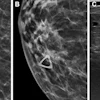
![A normal mammogram confirmed by three-year radiologic follow-up illustrates reader-marked regions of interest (ROIs) during (A) unaided (round 1) and (B) artificial intelligence (AI)–assisted (round 2) reading. Each colored dot represents an ROI for recall by a human reader. Readers could mark more than one ROI per case, represented by multiple dots of the same color. During AI-assisted reading, the AI system displayed three visible prompts: two with suspicion of malignancy scores of 35% (left mediolateral oblique [L MLO] and craniocaudal [L CC]) and one with a suspicion of malignancy score of 10% (right craniocaudal [R CC]), shown as polygonal overlays. Without AI, six of 10 readers (60%) marked a false-positive ROI. With AI assistance, this fell to two of 10 (20%). R MLO = right mediolateral oblique.](https://img.auntminnie.com/mindful/smg/workspaces/default/uploads/2026/07/2026-07-14-radiology-mammogram-ai-auto-bias.H0bYO8QlWs.jpg?auto=format%2Ccompress&fit=crop&h=100&q=70&w=100)


![A normal mammogram confirmed by three-year radiologic follow-up illustrates reader-marked regions of interest (ROIs) during (A) unaided (round 1) and (B) artificial intelligence (AI)–assisted (round 2) reading. Each colored dot represents an ROI for recall by a human reader. Readers could mark more than one ROI per case, represented by multiple dots of the same color. During AI-assisted reading, the AI system displayed three visible prompts: two with suspicion of malignancy scores of 35% (left mediolateral oblique [L MLO] and craniocaudal [L CC]) and one with a suspicion of malignancy score of 10% (right craniocaudal [R CC]), shown as polygonal overlays. Without AI, six of 10 readers (60%) marked a false-positive ROI. With AI assistance, this fell to two of 10 (20%). R MLO = right mediolateral oblique.](https://img.auntminnie.com/mindful/smg/workspaces/default/uploads/2026/07/2026-07-14-radiology-mammogram-ai-auto-bias.H0bYO8QlWs.jpg?auto=format%2Ccompress&fit=crop&h=112&q=70&w=112)