Breast imaging center operator Solis Mammography is highlighting a study on digital breast tomosynthesis (DBT) at RSNA 2016.
Solis Mammography Chief Medical Officer Dr. Stephen Rose discovered that the addition of DBT to mammography significantly improved recall rates, cancer detection, and invasive cancer detection for women younger than age 50.
Rose and Solis Mammography collected data last year from a network of community-based screening centers of women ages 40 to 49 to investigate if the addition of DBT to mammography could improve screening performance outcomes. The study included 65,457 screening exams -- 45,320 digital mammography exams and 20,137 DBT exams.
They found the addition of DBT decreased recall rates by 6%, increased cancer detection rates by 67%, and increased positive predictive values for recall by 56%.





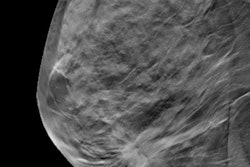


![A normal mammogram confirmed by three-year radiologic follow-up illustrates reader-marked regions of interest (ROIs) during (A) unaided (round 1) and (B) artificial intelligence (AI)–assisted (round 2) reading. Each colored dot represents an ROI for recall by a human reader. Readers could mark more than one ROI per case, represented by multiple dots of the same color. During AI-assisted reading, the AI system displayed three visible prompts: two with suspicion of malignancy scores of 35% (left mediolateral oblique [L MLO] and craniocaudal [L CC]) and one with a suspicion of malignancy score of 10% (right craniocaudal [R CC]), shown as polygonal overlays. Without AI, six of 10 readers (60%) marked a false-positive ROI. With AI assistance, this fell to two of 10 (20%). R MLO = right mediolateral oblique.](https://img.auntminnie.com/mindful/smg/workspaces/default/uploads/2026/07/2026-07-14-radiology-mammogram-ai-auto-bias.H0bYO8QlWs.jpg?auto=format%2Ccompress&fit=crop&h=112&q=70&w=112)


