A radiologic technologist (RT) in Georgia accused of submitting false mammogram results entered a plea of not guilty in a hearing on November 17.
Rachael Michelle Rapraeger is accused of 10 counts of reckless conduct and 10 counts of computer fraud for allegedly entering nearly 1,300 negative mammography results without a physician's review into the computer system at Perry Hospital in Perry. Rapraeger worked at the hospital until she was terminated following discovery of the unread mammograms during a quality control check in April.
Of the cases, 10 women turned out to have mammograms positive for cancer, according to prosecutors.
Rapraeger entered the not guilty plea in a hearing in Houston County Superior Court, according to an article in the Macon Telegraph. She is free on a $50,000 bond, and the earliest her case could be heard would be April 2011, according to the newspaper.
Related Reading
Indicted Ga. technologist surrenders to authorities, September 14, 2010
Technologist indicted over false mammo results, September 9, 2010
Ga. hospital asks for police investigation, May 14, 2010
Hospital to retake 900 mammograms due to employee error, May 12, 2010
FDA cracks down on mammo RT records, February 26, 2010
Copyright © 2010 AuntMinnie.com
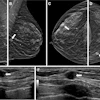
![A normal mammogram confirmed by three-year radiologic follow-up illustrates reader-marked regions of interest (ROIs) during (A) unaided (round 1) and (B) artificial intelligence (AI)–assisted (round 2) reading. Each colored dot represents an ROI for recall by a human reader. Readers could mark more than one ROI per case, represented by multiple dots of the same color. During AI-assisted reading, the AI system displayed three visible prompts: two with suspicion of malignancy scores of 35% (left mediolateral oblique [L MLO] and craniocaudal [L CC]) and one with a suspicion of malignancy score of 10% (right craniocaudal [R CC]), shown as polygonal overlays. Without AI, six of 10 readers (60%) marked a false-positive ROI. With AI assistance, this fell to two of 10 (20%). R MLO = right mediolateral oblique.](https://img.auntminnie.com/mindful/smg/workspaces/default/uploads/2026/07/2026-07-14-radiology-mammogram-ai-auto-bias.H0bYO8QlWs.jpg?auto=format%2Ccompress&fit=crop&h=100&q=70&w=100)


![A normal mammogram confirmed by three-year radiologic follow-up illustrates reader-marked regions of interest (ROIs) during (A) unaided (round 1) and (B) artificial intelligence (AI)–assisted (round 2) reading. Each colored dot represents an ROI for recall by a human reader. Readers could mark more than one ROI per case, represented by multiple dots of the same color. During AI-assisted reading, the AI system displayed three visible prompts: two with suspicion of malignancy scores of 35% (left mediolateral oblique [L MLO] and craniocaudal [L CC]) and one with a suspicion of malignancy score of 10% (right craniocaudal [R CC]), shown as polygonal overlays. Without AI, six of 10 readers (60%) marked a false-positive ROI. With AI assistance, this fell to two of 10 (20%). R MLO = right mediolateral oblique.](https://img.auntminnie.com/mindful/smg/workspaces/default/uploads/2026/07/2026-07-14-radiology-mammogram-ai-auto-bias.H0bYO8QlWs.jpg?auto=format%2Ccompress&fit=crop&h=112&q=70&w=112)