Carestream Health of Rochester, NY, has received approval from the U.S. Food and Drug Administration (FDA) for its high-resolution computed radiography (CR) full-field digital mammography (FFDM) system.
Carestream's DirectView CR Mammography feature allows users to capture mammography images digitally, using a healthcare provider's existing mammography x-ray unit, according to Carestream. Once the FDA approves the final product labeling, the company will begin immediate commercial distribution of the system in the U.S., Carestream said.
The company's announcement comes the same day that the FDA changed the classification for digital mammography devices from class III or high-risk devices, which require a premarket approval application, to class II or medium-risk devices, which only require a 510(k) submission.
Related Reading
Carestream scores DRX retrofit sales, November 3, 2010
Carestream to highlight PACS upgrades at RSNA, October 29, 2010
Carestream adds CR mammo features, October 27, 2010
Carestream scores 2 major contracts, October 19, 2010
Carestream sells 1,000th DR system, October 13, 2010
Copyright © 2010 AuntMinnie.com
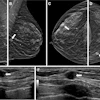
![A normal mammogram confirmed by three-year radiologic follow-up illustrates reader-marked regions of interest (ROIs) during (A) unaided (round 1) and (B) artificial intelligence (AI)–assisted (round 2) reading. Each colored dot represents an ROI for recall by a human reader. Readers could mark more than one ROI per case, represented by multiple dots of the same color. During AI-assisted reading, the AI system displayed three visible prompts: two with suspicion of malignancy scores of 35% (left mediolateral oblique [L MLO] and craniocaudal [L CC]) and one with a suspicion of malignancy score of 10% (right craniocaudal [R CC]), shown as polygonal overlays. Without AI, six of 10 readers (60%) marked a false-positive ROI. With AI assistance, this fell to two of 10 (20%). R MLO = right mediolateral oblique.](https://img.auntminnie.com/mindful/smg/workspaces/default/uploads/2026/07/2026-07-14-radiology-mammogram-ai-auto-bias.H0bYO8QlWs.jpg?auto=format%2Ccompress&fit=crop&h=100&q=70&w=100)


![A normal mammogram confirmed by three-year radiologic follow-up illustrates reader-marked regions of interest (ROIs) during (A) unaided (round 1) and (B) artificial intelligence (AI)–assisted (round 2) reading. Each colored dot represents an ROI for recall by a human reader. Readers could mark more than one ROI per case, represented by multiple dots of the same color. During AI-assisted reading, the AI system displayed three visible prompts: two with suspicion of malignancy scores of 35% (left mediolateral oblique [L MLO] and craniocaudal [L CC]) and one with a suspicion of malignancy score of 10% (right craniocaudal [R CC]), shown as polygonal overlays. Without AI, six of 10 readers (60%) marked a false-positive ROI. With AI assistance, this fell to two of 10 (20%). R MLO = right mediolateral oblique.](https://img.auntminnie.com/mindful/smg/workspaces/default/uploads/2026/07/2026-07-14-radiology-mammogram-ai-auto-bias.H0bYO8QlWs.jpg?auto=format%2Ccompress&fit=crop&h=112&q=70&w=112)