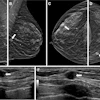
Digital breast tomosynthesis (DBT) should be considered for women with dense breasts rather than supplemental MRI or ultrasound, according to new guidelines by the American College of Physicians (ACP).
The guidelines, published April 17 in the Annals in Internal Medicine, also call for women ages 50 to 74 years who are at average risk of breast cancer to undergo biennial screening. And women between the ages of 40 and 49 should engage in informed decision making with their physicians about their breast cancer risk, the guidelines state.
“It is vital that screening recommendations account for the balance of benefits and harms, patients’ values and preferences, and costs,” the ACP said.
Breast cancer continues to burden women’s lives, with an estimated 317,000 cases reported in 2025 in the U.S. This makes for 15.5% of all cancer cases.
Breast cancer incidence increases with age and incidence differs by race and ethnicity, although recent evidence suggests a growing number of cases in younger women.
“Adult females who receive annual mammography over 10 years have a 50% to 60% chance of receiving a false-positive result, which affects quality of life and reduces future adherence to screening,” the ACP stated.
The ACP guidelines are intended to guide breast cancer screening in asymptomatic, average-risk adult women. The college’s Clinical Guidelines Committee created the guidelines, intended for internal medicine physicians and other clinicians.
The ACP said it used evidence from guidelines from the following organizations: the American College of Obstetricians and Gynecologists (ACOG), the Brazilian College of Radiology and Diagnostic Imaging, the Brazilian Society of Mastology, and the Brazilian Federation of Associations of Gynecology and Obstetrics (Brazilian Society), the Canadian Task Force on Preventive Health Care (CTFPHC, draft), the European Commission Initiative on Breast Cancer, and the U.S. Preventive Services Task Force (USPSTF).
The college said it did not use information from the American College of Radiology’s (ACR’s) evidence review because it “did not meet criteria of a systematic review.”
The ACP also called for clinicians to discuss discontinuing screening mammography for women ages 75 and older based on shared decision making.
“This is because the benefits of screening beyond age 74 are reduced or uncertain, while potential harms, such as overdiagnosis, become more likely with increasing age,” the college stated.
And for women with either heterogeneously or extremely dense breasts (BI-RADS C or D), the guidelines say clinicians should consider using supplemental DBT based on a variety of factors. These include benefits, harms, added radiation exposure, availability, values and preferences, and cost.
Finally, the guidelines call for clinicians not to use supplemental MRI or ultrasound in asymptomatic women with average risk and with heterogeneously or extremely dense breasts. The data the college cited provided “low-certainty” or insufficient evidence for either modality in this area, the ACP added.
The college presented its guidelines at the breaking news scientific plenary session "New in Annals of Internal Medicine: Hear it First from the Authors," held at the Moscone Center in San Francisco during the ACP Internal Medicine Meeting 2026.
Read the full guidelines here.