The American College of Radiology (ACR) has released mitigation strategies for breast imaging practices affected by an ongoing shortage of stereotactic breast biopsy needles.
The shortage began earlier this year after a major manufacturer halted shipments to address a product issue, the ACR said. The U.S. Food and Drug Administration (FDA) has added the shortage to its Medical Device Shortages List and expects it to ease in late 2026, according to the college.
The ACR's recommendations fall into several areas:
Procedure triage:
- Increase targeted ultrasound utilization prior to MRI or stereotactic biopsy where appropriate.
- Shift appropriate stereotactic and MRI biopsies to ultrasound-guided procedures when feasible.
- Defer low-suspicion lesions to short-interval follow-up when clinically appropriate.
Needle conservation:
- Expand supplier networks and diversify needle gauges and lengths.
- Utilize prior-generation devices where clinically appropriate.
- Limit unnecessary opening or wasting of devices.
Case prioritization:
- Prioritize BI-RADS 5 lesions, highly suspicious findings, neoadjuvant chemotherapy cases, surgical planning cases, and high-risk discordant lesions.
- Consider delayed scheduling for low-suspicion BI-RADS 4A findings and nonurgent repeat biopsies.
The ACR also recommends centralizing inventory tracking across breast imaging sites and communicating delays transparently to patients, including offering alternative biopsy locations where needles are available, it said.
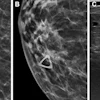


![A normal mammogram confirmed by three-year radiologic follow-up illustrates reader-marked regions of interest (ROIs) during (A) unaided (round 1) and (B) artificial intelligence (AI)–assisted (round 2) reading. Each colored dot represents an ROI for recall by a human reader. Readers could mark more than one ROI per case, represented by multiple dots of the same color. During AI-assisted reading, the AI system displayed three visible prompts: two with suspicion of malignancy scores of 35% (left mediolateral oblique [L MLO] and craniocaudal [L CC]) and one with a suspicion of malignancy score of 10% (right craniocaudal [R CC]), shown as polygonal overlays. Without AI, six of 10 readers (60%) marked a false-positive ROI. With AI assistance, this fell to two of 10 (20%). R MLO = right mediolateral oblique.](https://img.auntminnie.com/mindful/smg/workspaces/default/uploads/2026/07/2026-07-14-radiology-mammogram-ai-auto-bias.H0bYO8QlWs.jpg?auto=format%2Ccompress&fit=crop&h=100&q=70&w=100)


![A normal mammogram confirmed by three-year radiologic follow-up illustrates reader-marked regions of interest (ROIs) during (A) unaided (round 1) and (B) artificial intelligence (AI)–assisted (round 2) reading. Each colored dot represents an ROI for recall by a human reader. Readers could mark more than one ROI per case, represented by multiple dots of the same color. During AI-assisted reading, the AI system displayed three visible prompts: two with suspicion of malignancy scores of 35% (left mediolateral oblique [L MLO] and craniocaudal [L CC]) and one with a suspicion of malignancy score of 10% (right craniocaudal [R CC]), shown as polygonal overlays. Without AI, six of 10 readers (60%) marked a false-positive ROI. With AI assistance, this fell to two of 10 (20%). R MLO = right mediolateral oblique.](https://img.auntminnie.com/mindful/smg/workspaces/default/uploads/2026/07/2026-07-14-radiology-mammogram-ai-auto-bias.H0bYO8QlWs.jpg?auto=format%2Ccompress&fit=crop&h=112&q=70&w=112)