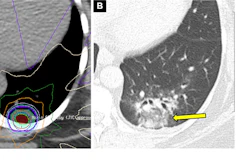
Radical radiotherapy use for lung cancer nearly doubled between 2010 and 2021, with five-year survival rates improving from 21.9% to 33.1%, according to research published in Clinical Oncology. The study supports expanding access to this treatment for early-stage and locally advanced lung cancer patients.
- Radical radiotherapy use jumped from 16.6% to 30.6% between 2010 and 2021
- Five-year cause-specific survival increased from 21.9% to 33.1% during the same period
- Study included 5,882 patients across three equal time periods over 11 years
- Increasing radical radiotherapy was identified as a strong independent factor tied to survival improvement
- Experts recommend urgent expansion of radiotherapy resources and clinical team planning to increase patient access
Radical radiotherapy usage is rising in lung cancer patients and may lead to improved outcomes, according to research published September 8 in Clinical Oncology.
Radical radiotherapy use nearly doubled between 2010 and 2021 in this patient population, while five-year cause-specific survival also jumped during the period, wrote a team of researchers led by Michael McMahon, MD, from the Northern Ireland Cancer Centre in Belfast and colleagues.
“These population-level data support the prioritization and expansion of radical radiotherapy utilization in patients with lung cancer in order to improve outcomes,” McMahon and co-authors wrote.
Radical radiotherapy is radiation therapy given with the intent to cure rather than provide palliative care. It uses higher radiation doses compared to conventional radiotherapy.
More lung cancer patients today can be treated with radical radiotherapy, with some leading clinical groups and international guidelines supporting this approach for early-stage or locally advanced lung cancer.
However, its use varies between countries globally. The researchers suggested this is due to several factors including non-systematic clinical decision-making and inequitable resource allocation.
Using regional population-level data, McMahon and colleagues explored trends in the use of radical radiotherapy. The researchers categorized data into three equal time periods: 2010 to 2013, 2014 to 2017, and 2018 to 2021.
The study included complete records for 5,882 patients. The team reported the following findings:
Radical radiotherapy use jumped from 16.6% to 30.6% throughout the study period.
Five-year cause-specific survival increased from 21.9% to 33.1%.
Adjusted hazard ratios for 2018 to 2021 period with and without radical radiotherapy were 0.67 and 0.78 respectively, compared to the 2010 to 2013 period.
Increasing radical radiotherapy proved to be a “strong” independent factor tied to survival improvement over the entire study period.
The results add to the body of work showing how various strategies may improve access to radical radiotherapy for lung cancer patients, the study authors wrote. They added that clinicians may now feel more confident offering this treatment option to patients who historically had poor treatment outcomes.
The authors also highlighted prior research suggesting that more investment and expansion of radiotherapy within thoracic oncology “would be a cost-effective intervention in a resource-constrained environment.”
“We recommend that lung cancer clinical teams, patient communities and policymakers urgently plan to increase radical radiotherapy utilization and resource accordingly,” the authors wrote.
Read the full study here.