A study of over 17,000 breast cancer patients found that only 28% consistently took prescribed hormone therapy for the full five years after lumpectomy, challenging the viability of omitting radiation therapy when long-term medication adherence is expected.
- Only 28% of patients remained continuously adherent to endocrine therapy at the 80% threshold through five-year follow-up after lumpectomy
- Patients who skipped radiation therapy were twice as likely to fall below the 50% medication-possession threshold and significantly more likely to miss 60% and 70% benchmarks
- Younger patients under 60 had 20-25% higher risk of nonadherence across all thresholds studied
- While annual adherence was higher (59-75% met the 80% threshold in individual years), longitudinal analysis showed steady accumulation of patients falling below the threshold over time
- Clinicians should consider radiation's local-control benefit alongside practical realities of maintaining long-term hormone therapy when discussing treatment de-escalation options
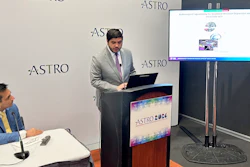
Less than one-third of low-risk breast cancer patients who were prescribed daily endocrine therapy in lieu of radiation therapy continued that treatment over the recommended time frame, according to research presented this week at the American Society for Radiation Oncology (ASTRO) annual meeting in Boston.
The results provide real-world context for treatment approaches that consider omitting radiation therapy with the expectation that patients will continue taking medication for at least five years, according to ASTRO.
“Our findings suggest that maintaining endocrine therapy as prescribed, taking a daily medication for five years, is more challenging in routine practice than we often assume,” said Shannon Jiang, MD, lead study author and a radiation oncology resident physician at Washington University School of Medicine in St. Louis.
After lumpectomy, patients with hormone receptor-positive early-stage breast cancer typically receive radiation therapy to reduce the risk of recurrence in the treated breast and endocrine therapy to lower the risk of cancer returning overall. However, clinical trials have shown that radiation therapy can be omitted in selected older patients with lower-risk disease.
In these studies, this approach did not compromise overall survival, although the risk of local recurrence was higher, according to ASTRO. Also, endocrine therapy was part of the treatment plan for all patients, making long-term medication an important component of the radiation-omission strategy.
In their study, the researchers analyzed Merative MarketScan commercial and multistate Medicaid claims data for 17,025 patients age 23-64 with HR+, early-stage breast cancer. All patients underwent lumpectomy and filled at least one endocrine therapy prescription. In addition, 89% also received radiation therapy.
Next, the researchers used pharmacy claims to calculate patients’ medication possession ratio, a measure for how consistently they filled their endocrine therapy prescription. Patients were considered adherent when they had medication available for at least 80% of the measured period.
Overall, approximately 28% of patients remained continuously adherent at the 80% threshold through five-year follow-up. Annual adherence appeared considerably higher, with 59% to 75% of patients meeting the threshold in individual years, but the longitudinal analysis showed a steady accumulation of patients falling below it over time, according to the society.
The researchers also observed that radiation therapy omission was associated with a higher risk of nonadherence to long-term endocrine therapy. Those who did not receive radiation therapy were twice as likely to fall below the 50% medication-possession threshold over time and were significantly more likely to fall below the 60% and 70% benchmarks. The association was not significant at the standard 80% adherence threshold.
In other findings, younger age was also associated with nonadherence. Patients younger than 60 had a 20 to 25% higher risk of becoming nonadherent across the thresholds studied.
“As studies expand radiation therapy omission to younger patients with favorable tumors, it becomes increasingly important to understand what happens with long-term adherence to endocrine therapy in real-world settings,” Dr. Jiang said.
In the future, Jiang and colleagues plan to add Medicare data to their analysis in order to examine adherence in the patient population older than 64.
“Our goal is to give clinicians better real-world information for treatment counseling,” she said. “The evidence we use to guide de-escalation needs to be considered alongside what happens to patients over the years that follow.”
Although radiation therapy omission can be appropriate for selected people with lower-risk breast cancer, endocrine therapy is an important part of that strategy, noted Jose G. Bazan, MD, Chair of the ASTRO Breast Cancer Resource Panel.
“This study adds real-world context to treatment discussions by showing how difficult long-term adherence can be,” Bazan said in an ASTRO statement. “When discussing omission, clinicians should consider radiation’s established local-control benefit alongside the practical realities of staying on endocrine therapy for years. The goal is to choose a treatment plan that patients can realistically maintain over time.”
Check out AuntMinnie's full coverage of ASTRO 2026 on our ShowCast.