
MRI imaging shows that former elite soccer players have higher levels of depression, anxiety, and brain volume loss compared to healthy controls, suggesting measurable effects on brain health from repetitive heading impacts even before clinical neurodegenerative disease appears.
- 31% of former soccer players showed clinically significant depression symptoms versus 9% of controls
- 42% of former players reported clinically significant anxiety compared to 25% of controls
- MRI scans revealed lower gray matter volume in frontal, cingulate, and thalamic brain regions responsible for memory, attention, and emotional regulation
- About 2% of MRI scans showed clinically significant atrophy suggestive of neurodegeneration
MRI shows that former elite soccer players have a higher symptom burden of neurodegenerative disease, according to findings presented July 12 at the Alzheimer’s Association International Conference (AAIC) annual meeting in London, England.
The study found that former players reported higher levels of depression and anxiety, as well as having subjective difficulties with thinking and decision-making skills. Caleigh Grace Lynch from Imperial College London and the UK Dementia Research Institute Centre for Care Research & Technology shared her team’s results.
“These findings suggest there may be measurable effects on brain health in former elite soccer players even in mid-life, before clinically apparent neurodegenerative disease would typically emerge,” Lynch said. “While we did not find significant differences in objective cognitive testing between the groups, we did observe important differences in symptoms and brain structure.”
MRI in recent years has helped uncover the consequences of heading in soccer on the brain. Previous studies have shown that players who head the ball more often are at higher risk of experiencing concussion symptoms and for decline in white matter microstructure.
Lynch and colleagues noted that detailed in vivo data for elite soccer players is limited. They hypothesized that mid-life former soccer players show measurable differences in symptom burden, cognitive function, and brain structure compared to healthy matched controls.
Their study included 142 former elite soccer players with a median age 44 years (88.73% male) and 56 healthy controls with a median age of 47.5 years (76.79% male). The researchers used validated symptom questionnaires and performed standardized neuropsychology. They used voxel-based morphometry (VBM) analysis of structural MRI to study differences in regional brain volume.
The study is part of the Advanced Brain Health Clinic Research Program based at the Institute of Sport, Exercise & Health. This is an integrated clinical care and research initiative studying the long-term effects of repetitive head impacts on retired elite soccer and rugby players.
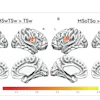
 Voxel-based morphometry (VBM) group comparison of grey matter brain volumes. TFCE-corrected significance map shown (one-tailed t-test; higher significance indicated by light blue color). (a) Comparison between ex-soccer players (n = 124) and controls (n = 40). (b) Comparison between ex-rugby players (n = 200) and controls (n = 33) from Graham & Zimmerman et al. (2025), reproduced with permission under Creative Commons license.
The former elite professional soccer players reported a significantly higher symptom burden compared to the control group. This included depression and anxiety, as well as worse self-rated ability to plan, focus on and solve problems, and manage daily tasks.
The team found that 31% of the former players scored in the range indicating clinically significant depression symptoms, compared with 9% of controls. And 42% of former players scored in the range indicating clinically significant anxiety symptoms compared with 25% of controls.
The study also included MRI data from 124 of the former soccer players. The researchers noted lower gray matter volume in several brain regions compared to the health controls. These included the frontal, cingulate, and thalamic areas, which have key roles in memory, attention, decision making, and emotional regulation.
And about 2% of MRI scans had clinically significant atrophy suggestive of neurodegeneration, the researchers found.
The team recommended further research into this finding as well as studies on how the combination of elevated symptoms and altered brain volume patterns may suggest trauma-related neurodegeneration.
“Research like this helps us better understand brain health factors across the lifespan and reinforces the importance of injury prevention and monitoring,” said Maria Carrillo, PhD, Alzheimer’s Association chief science officer and medical affairs lead, in a statement. “These findings can help players, physicians and sports organizations better understand the risks of contact sports and how to participate safely.”
.fFmgij6Hin.png?auto=compress%2Cformat&fit=crop&h=100&q=70&w=100)

.fFmgij6Hin.png?auto=compress%2Cformat&fit=crop&h=167&q=70&w=250)


