A new MRI-based study shows that 3D knee shape significantly influences how much force is placed on the anterior cruciate ligament, with women experiencing 17% higher ACL forces than men and injured individuals showing 20-26% greater forces than uninjured counterparts.
- 26% greater ACL force found in injured versus uninjured men, and 20% greater in injured versus uninjured women
- Women's knees show 17% higher ACL forces compared to men's knees across the entire study population
- Researchers used MRI-based digital twin models from 168 individuals (120 women, 48 men) to simulate knee mechanics and ACL loading
- Knee twisting motion and tibial rotation were identified as key factors driving increased ACL loading in both sexes
- Findings support personalized injury prevention strategies and individualized ACL surgery and rehabilitation approaches based on patient-specific knee geometry
3D knee shape drives greater anterior cruciate ligament (ACL) loading in injured versus healthy individuals, according to research published in Communications Medicine.
Researchers led by Andrew Pechstein, PhD, from the Hospital for Special Surgery in New York, also found in their MRI-based digital twin model that women are more affected than men in this area.
“A thinner ACL amplified these differences between groups,” Pechstein and colleagues wrote. “A twisting motion of the knee was characteristic of knees with greater ACL loads.”
While some young, active individuals may sustain ACL injury over time, others do not despite having similar levels of activity. Young, active females are more susceptible to ACL injury risk than young men.
The researchers suggested that interactions among the knee’s complex 3D articular shapes could influence how multiplanar loads in noncontact ACL injury are transmitted across the joint.
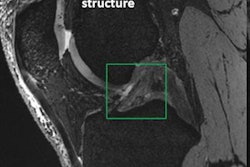
The Pechstein team studied this relationship, including whether a sex disparity exists in this area. It used a physics-based virtual model of the knee built from MRI exams of 168 individuals to create digital twins. The study cohort included 120 women and 48 men and equal numbers of individuals with and without acute ACL injury.
The researchers found a 20% greater ACL force in injured women compared to uninjured women, and a 26% greater force in injured versus uninjured men.
The entire female cohort meanwhile had a 17% greater ACL force compared to the male cohort.
“These differences are amplified after scaling ACL force by ACL cross-sectional area,” the researchers wrote. “Coupled internal tibial rotation mediates increased ACL loading in both sexes, and anterior tibial translation contributes additionally in females.”
The results provide a mechanistic basis for increased ACL loading in people who sustain ACL injury, particularly in women, the study authors wrote.
“This work establishes a foundation for incorporating subject-specific knee shape into emerging digital twin approaches for individualized knee mechanics assessments, risk stratification, injury prevention, and personalized ACL surgeries and rehabilitation,” the authors added.
The researchers highlighted that future work will translate these findings into practical applications, with the goal of accelerating knee care at the individual patient level.
Read the full study here.