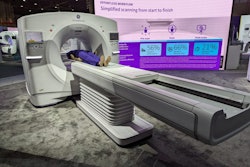
GE HealthCare (GEHC) and the University of Wisconsin-Madison have inked a 10-year strategic research collaboration that expands the existing scope of their relationship.
The newest collaboration includes future plans to develop improved diagnosis and disease management through MRI, CT, ultrasound, interventional radiology, theranostics, and molecular imaging.
GE HealthCare has had a long-standing relationship with UW-Madison, providing research support, funding, diagnostic imaging equipment, and research staff.
Over the past decade, UW-Madison and GE HealthCare have collaborated on more than 130 research studies. Most recently, UW-Madison became the first U.S. research scanning site for GE HealthCare’s silicon-based photon counting CT prototype. GE HealthCare and UW-Madison have also partnered to create standardized CT protocols for GE HealthCare systems that have been distributed to more than 4,000 sites around the world.
Both GE HealthCare and UW-Madison are members of Wisconsin’s public-private consortium, led by BioForward, which has helped them both secure the state’s phase I regional technology and innovation hub designation.



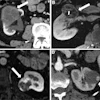
![Axial images from unenhanced calcium score cardiac CT (left) and curved planar reformation images from CT angiography (right) show that higher long-term exposure to air pollution is associated with greater coronary artery calcium and more obstructive coronary artery disease (CAD). Top row: Images in a 68-year-old male patient with higher 10-year mean ambient air pollution exposure (7.9 μg/m3 for particulate matter measuring ≤2.5 μm in diameter [PM2.5] and 17.4 parts per billion [ppb] for NO2) with extensive CAD (coronary artery calcium score [CACS] >1,000 and obstructive CAD [≥70% diameter stenosis]). Bottom row: Images in a 57-year-old female patient with lower 10-year mean ambient air pollution exposure (6.3 μg/m3 for PM2.5 and 4.6 ppb for NO2) with no CAD (CACS = 0 and no obstructive stenosis).](https://img.auntminnie.com/mindful/smg/workspaces/default/uploads/2026/06/hanneman.r6SMLzkezo.png?auto=format%2Ccompress&fit=crop&h=100&q=70&w=100)


![Axial images from unenhanced calcium score cardiac CT (left) and curved planar reformation images from CT angiography (right) show that higher long-term exposure to air pollution is associated with greater coronary artery calcium and more obstructive coronary artery disease (CAD). Top row: Images in a 68-year-old male patient with higher 10-year mean ambient air pollution exposure (7.9 μg/m3 for particulate matter measuring ≤2.5 μm in diameter [PM2.5] and 17.4 parts per billion [ppb] for NO2) with extensive CAD (coronary artery calcium score [CACS] >1,000 and obstructive CAD [≥70% diameter stenosis]). Bottom row: Images in a 57-year-old female patient with lower 10-year mean ambient air pollution exposure (6.3 μg/m3 for PM2.5 and 4.6 ppb for NO2) with no CAD (CACS = 0 and no obstructive stenosis).](https://img.auntminnie.com/mindful/smg/workspaces/default/uploads/2026/06/hanneman.r6SMLzkezo.png?auto=format%2Ccompress&fit=crop&h=112&q=70&w=112)