Wednesday, December 1 | 9:30 a.m.-10:30 a.m. | SSGI11-3 | Room TBA
Deep learning identifies CT biomarkers that help detect and predict type 2 diabetes in patients undergoing CT for other indications, according to findings being shared Wednesday morning."The diagnosis of diabetes is associated with CT biomarkers, especially measures of pancreas CT attenuation and visceral fat," wrote a team led by Hima Tallam, a medical and doctoral student at Rutgers New Jersey Medical School in Wayne, NJ, in a study abstract.
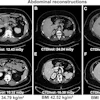
Tallam and colleagues conducted a study that included 8,992 patients who underwent colorectal cancer screening with CT colonography; of these, 572 had type 2 diabetes and 1,880 were dysglycemic. The researchers segmented images of the pancreas using a deep-learning algorithm that flagged biomarkers such as CT attenuation, volume, fat content, and the fractal dimension of the organ, as well as visceral fat and atherosclerotic plaque.
The deep-learning model showed that diabetics had lower pancreas CT attenuation and higher visceral fat than those patients who did not have the disease. Other key predictors of type 2 diabetes on CT included the following:
- Fractal dimension of the pancreas
- Severity of abdominal aortic plaque
- Body mass index (BMI) higher than 30 kg/m2
"Fully-automated CT biomarkers can be used for the opportunistic detection and prediction of type 2 diabetes on scans performed for other indications," Tallam and colleagues concluded.