Enterprise imaging vendor Novarad has launched a free artificial intelligence (AI)-based software tool to aid in the diagnosis of COVID-19 on CT scans.
Provided in partnership with Intel and via Microsoft's Azure cloud computing service, COVID-19 AI Diagnostic Assistant utilizes DICOM routing, encryption, an AI processing engine, and reporting capabilities to help in detecting COVID-19 on CT, according to Novarad.
To download COVID-19 AI Diagnostic Assistant, hospitals must first download the company's COVID AI edge client software to a hospital computer or virtual machine. The software will then print out instructions for how to connect the software to a CT scanner or PACS, the firm said.
Once acquired, CT studies are then anonymized and routed to the AI engine on Azure for analysis. A secure, 3,000-bit encrypted optical access code is then sent to the associated onsite printer, and a report containing the probability of COVID-19 is then created, Novarad said. The printed code can then be scanned and viewed from a mobile device or PC, and then printed or downloaded as a PDF, according to the firm.
Novarad noted that the COVID AI client is built on its CryptoChart software.


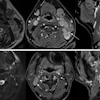

![Axial images from unenhanced calcium score cardiac CT (left) and curved planar reformation images from CT angiography (right) show that higher long-term exposure to air pollution is associated with greater coronary artery calcium and more obstructive coronary artery disease (CAD). Top row: Images in a 68-year-old male patient with higher 10-year mean ambient air pollution exposure (7.9 μg/m3 for particulate matter measuring ≤2.5 μm in diameter [PM2.5] and 17.4 parts per billion [ppb] for NO2) with extensive CAD (coronary artery calcium score [CACS] >1,000 and obstructive CAD [≥70% diameter stenosis]). Bottom row: Images in a 57-year-old female patient with lower 10-year mean ambient air pollution exposure (6.3 μg/m3 for PM2.5 and 4.6 ppb for NO2) with no CAD (CACS = 0 and no obstructive stenosis).](https://img.auntminnie.com/mindful/smg/workspaces/default/uploads/2026/06/hanneman.r6SMLzkezo.png?auto=format%2Ccompress&fit=crop&h=100&q=70&w=100)


![Axial images from unenhanced calcium score cardiac CT (left) and curved planar reformation images from CT angiography (right) show that higher long-term exposure to air pollution is associated with greater coronary artery calcium and more obstructive coronary artery disease (CAD). Top row: Images in a 68-year-old male patient with higher 10-year mean ambient air pollution exposure (7.9 μg/m3 for particulate matter measuring ≤2.5 μm in diameter [PM2.5] and 17.4 parts per billion [ppb] for NO2) with extensive CAD (coronary artery calcium score [CACS] >1,000 and obstructive CAD [≥70% diameter stenosis]). Bottom row: Images in a 57-year-old female patient with lower 10-year mean ambient air pollution exposure (6.3 μg/m3 for PM2.5 and 4.6 ppb for NO2) with no CAD (CACS = 0 and no obstructive stenosis).](https://img.auntminnie.com/mindful/smg/workspaces/default/uploads/2026/06/hanneman.r6SMLzkezo.png?auto=format%2Ccompress&fit=crop&h=112&q=70&w=112)