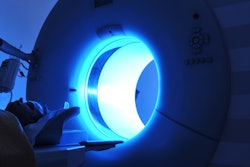
Clinicians at the Maharaja Yeshwantrao Hospital in India have not been complying with basic rules to protect patients and staff from radiation exposure during x-ray and CT exams, according to an article posted on Sunday in the Times of India.
Despite being one of the oldest and most highly regarded medical colleges in the country, Maharaja Yeshwantrao Hospital has not been offering protective gear such as lead aprons and thyroid shields to patients undergoing x-ray or CT exams, the report noted. A recent inspection by the Atomic Energy Regulatory Board (AERB) found that at least eight x-ray units at the hospital did not have up-to-date AERB licenses and that the hospital did not carry enough protective equipment.
Maharaja Yeshwantrao Hospital did purchase protective equipment and radiation badges following the inspection, but it did not make appropriate efforts to use them, radiologist Dr. Shivkant Vajpai, who participated in the inspection, said in the article.
Compounding this shortcoming, each hospital employee is performing roughly 100 patient x-ray exams per day during peak hours (9 a.m. to 3 p.m.), which far exceeds the daily limit of 20 patients per day per employee, the report added. Only one radiologist reads x-rays during peak hours, and staff members are not using safety gear when completing the exams.
The hospital's superintendent responded to these claims by stating that the hospital was monitoring staff members' exposure to radiation with badges, though no effort has been made to limit the high daily caseload.
![Axial images from unenhanced calcium score cardiac CT (left) and curved planar reformation images from CT angiography (right) show that higher long-term exposure to air pollution is associated with greater coronary artery calcium and more obstructive coronary artery disease (CAD). Top row: Images in a 68-year-old male patient with higher 10-year mean ambient air pollution exposure (7.9 μg/m3 for particulate matter measuring ≤2.5 μm in diameter [PM2.5] and 17.4 parts per billion [ppb] for NO2) with extensive CAD (coronary artery calcium score [CACS] >1,000 and obstructive CAD [≥70% diameter stenosis]). Bottom row: Images in a 57-year-old female patient with lower 10-year mean ambient air pollution exposure (6.3 μg/m3 for PM2.5 and 4.6 ppb for NO2) with no CAD (CACS = 0 and no obstructive stenosis).](https://img.auntminnie.com/mindful/smg/workspaces/default/uploads/2026/06/hanneman.r6SMLzkezo.png?auto=format%2Ccompress&fit=crop&h=100&q=70&w=100)


![Axial images from unenhanced calcium score cardiac CT (left) and curved planar reformation images from CT angiography (right) show that higher long-term exposure to air pollution is associated with greater coronary artery calcium and more obstructive coronary artery disease (CAD). Top row: Images in a 68-year-old male patient with higher 10-year mean ambient air pollution exposure (7.9 μg/m3 for particulate matter measuring ≤2.5 μm in diameter [PM2.5] and 17.4 parts per billion [ppb] for NO2) with extensive CAD (coronary artery calcium score [CACS] >1,000 and obstructive CAD [≥70% diameter stenosis]). Bottom row: Images in a 57-year-old female patient with lower 10-year mean ambient air pollution exposure (6.3 μg/m3 for PM2.5 and 4.6 ppb for NO2) with no CAD (CACS = 0 and no obstructive stenosis).](https://img.auntminnie.com/mindful/smg/workspaces/default/uploads/2026/06/hanneman.r6SMLzkezo.png?auto=format%2Ccompress&fit=crop&h=112&q=70&w=112)