Tuesday, November 28 | 11:20 a.m.-11:30 a.m. | SSG13-06 | Room S404AB
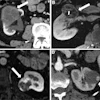
In this talk, researchers will describe how computer-aided detection (CAD) can lead to marked reductions in radiation dose on low-dose CT lung cancer screening scans, even when image slice thickness is altered.CT lung cancer screening already tends to use low doses, but researchers from the University of California, Los Angeles (UCLA) wanted to see how low they could go without hindering CT's ability to detect lung cancer.
The group applied a CAD algorithm to low-dose CT scans of 59 patients and extracted the image and raw projection data. The researchers then added noise to the data to simulate radiation dose reductions of 10% (0.2 mGy), 25% (0.5 mGy), and 50% (1 mGy). They further reconstructed the data at various slice thicknesses and reconstruction kernels.
Despite the increased amount of noise, computer-aided detection accurately spotted lung nodules on the simulated images at all the parameters, except at the sharpest reconstruction kernel.
"We found that even after 50% dose reduction of the original low-dose level, the impact on the performance of CAD in the detection of lung nodules was relatively minor," presenter Nastaran Emaminejad told AuntMinnie.com.
Computer-aided detection can still be a useful diagnostic tool even at lower dose levels than are currently used in CT lung cancer screening, the researchers concluded.
You can learn more about their findings by catching this presentation on Tuesday.