Imaging software developer Median Technologies has released MediScan, a software portfolio designed to provide automated detection, quantification, and monitoring of cancerous or suspicious lesions diagnosed on CT scans.
The company said it will initially focus on commercializing MediScan in Asia and more specifically in China. Median plans to collaborate with Chinese investor and partner Furui to help position MediScan as the reference medical device for major programs dedicated to cancer screening, detection, diagnosis, and monitoring in China. In addition, Median will also focus on the European market by leveraging its legacy hospital-based customers who were early adopters of Median's previous Lesion Management Solution software, according to the vendor.
Future releases of MediScan will include new technology based on artificial intelligence, cloud computing, and big-data analytics, according to the vendor.
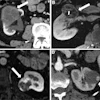







![Images show the pectoralis muscles of a healthy male individual who never smoked (age, 66 years; height, 178 cm; body mass index [BMI, calculated as weight in kilograms divided by height in meters squared], 28.4; number of cigarette pack-years, 0; forced expiratory volume in 1 second [FEV1], 97.6% predicted; FEV1: forced vital capacity [FVC] ratio, 0.71; pectoralis muscle area [PMA], 59.4 cm2; pectoralis muscle volume [PMV], 764 cm3) and a male individual with a smoking history and chronic obstructive pulmonary disorder (COPD) (age, 66 years; height, 178 cm; BMI, 27.5; number of cigarette pack-years, 43.2, FEV1, 48% predicted; FEV1:FVC, 0.56; PMA, 35 cm2; PMV, 480.8 cm3) from the Canadian Cohort Obstructive Lung Disease (i.e., CanCOLD) study. The CT image is shown in the axial plane. The PMV is automatically extracted using the developed deep learning model and overlayed onto the lungs for visual clarity.](https://img.auntminnie.com/mindful/smg/workspaces/default/uploads/2026/03/genkin.25LqljVF0y.jpg?auto=format%2Ccompress&crop=focalpoint&fit=crop&h=112&q=70&w=112)

