Swiss researchers demonstrated that iodine contrast in postmortem CT angiography can be reduced by up to 29% when doses are tailored to patient body morphology, maintaining diagnostic image quality while reducing environmental pollution and costs.
- Iodine contrast can be reduced by 14-29% in postmortem CT angiography using tailored dose protocols based on body mass index
- The 180 ml Angiofil mixture works best for patients with BMI above 35 kg/m², while 150 ml is optimal for BMI of 35 kg/m² or below
- Study of 30 consecutive cases showed excellent vascular assessment and maintained diagnostic quality with reduced contrast volumes
- Lower iodine consumption decreases wastewater pollution and significantly reduces contrast media procurement costs
- Next-generation CT systems like dual-energy CT and photon-counting technology may enable even greater iodine reductions in the future
Amounts of iodinated contrast agent can be cut by up to 29% in postmortem CT angiography when doses are tailored to body morphology, researchers have reported.
A team in Switzerland evaluated four progressively diluted contrast mixtures in multiphase postmortem CT angiography (CTA), with findings suggesting the decades-old standard protocol can be optimized to prevent potential pollution.
"This optimization supports more environmentally sustainable [postmortem] CTA practice without compromising diagnostic image quality," noted lead author Christine Bruguier, of University of Lausanne, and colleagues. The study was published November 6 in the International Journal of Legal Medicine.
The standard multiphase postmortem CTA contrast mixture of 3,500 ml of paraffin oil combined with 210 ml of Angiofil (an iodine-based oil contrast agent) was established more than 15 years ago using late-1990s CT technology, the group wrote. Growing environmental concerns about iodine entering wastewater systems are driving contrast reduction strategies in clinical radiology, they added.
"Similar pollution considerations should be applied in forensic medicine," they wrote.
To that end, the researchers enrolled 30 consecutive cases of suspected natural death referred for multiphase postmortem CTA between June 2024 and September 2025. They tested four progressively diluted Angiofil–paraffin mixtures: 200 ml, 180 ml, 150 ml, and 120 ml of Angiofil in 3,500 ml of paraffin. Contrast enhancement was quantified by measuring Hounsfield units (HU) in the ascending thoracic aorta. Image quality was independently assessed by a forensic radiologist with more than seven years of experience.
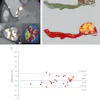
 Example of a case with a dilution of 120 ml and a BMI of 31.1 kg/m2: a clinical setting (ww:565; wl:103); b window width and window level and setting (ww:469;wl:81) used for radiological interpretation.International Journal of Legal Medicine
The 200 ml mixture showed no relevant improvement over the original formulation, according to the findings. The 180 ml mixture allowed excellent vascular assessment in individuals with a body mass index (BMI) above 35 kg/m², while 150 ml provided optimal image quality in those with a BMI of 35 kg/m² or below.
The 120 ml mixture remained diagnostically acceptable in most cases, but produced photon-starvation artifacts in individuals with high muscle mass or a BMI above 33 kg/m². The recommended dilutions represent Angiofil reductions of approximately 14% and 29% versus the standard 210 ml volume, the researchers reported.
"This reduction may contribute to decreasing the amount of iodine containing waste into wastewater systems. The economic benefits are also substantial, as lower overall contrast media consumption translates directly into reduced procurement costs," the authors wrote.
Next-generation CT systems, including dual-energy CT (DECT) and photon-counting computed tomography (PCCT), may enable further iodine reductions, they added, and the approach could potentially extend to other iodinated contrast formulations, the researchers concluded.
The full study is available here.