Dear AuntMinnie India Member,
Published literature keeps us informed about new research and clinical studies. But often, in routine practice we tend to stick to what we learnt in medical school. In this issue, AuntMinnieIndia brings you excerpts from Dr Madhukar Pai's presentation at the Clinical UltraSonography in Practice (CUSP) conference on using likelihood ratios from research studies in routine practice.
What are likelihood ratios? How are they different from sensitivity, specificity, and other measures we come across for assessing the effectiveness of a new imaging technique or modality? These are some of the questions Pai, a doctoral candidate at the University of California, Berkeley, addressed in his presentation and that we bring to you in an article.
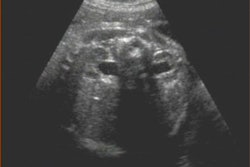
In another story we're featuring this week, Dr S. Suresh and Pai jointly tackle the tricky issue of minor ultrasound markers and their role in determining whether invasive testing should be recommended for pregnant women. Armed with the ammunition from these two experts, invasive testing need no longer be a poser -- at least on the question of minor markers.
Happy learning. And before you log off, don't forget to take the AuntMinnieIndia user survey. E-mail your feedback, views, and comments to [email protected].






![A normal mammogram confirmed by three-year radiologic follow-up illustrates reader-marked regions of interest (ROIs) during (A) unaided (round 1) and (B) artificial intelligence (AI)–assisted (round 2) reading. Each colored dot represents an ROI for recall by a human reader. Readers could mark more than one ROI per case, represented by multiple dots of the same color. During AI-assisted reading, the AI system displayed three visible prompts: two with suspicion of malignancy scores of 35% (left mediolateral oblique [L MLO] and craniocaudal [L CC]) and one with a suspicion of malignancy score of 10% (right craniocaudal [R CC]), shown as polygonal overlays. Without AI, six of 10 readers (60%) marked a false-positive ROI. With AI assistance, this fell to two of 10 (20%). R MLO = right mediolateral oblique.](https://img.auntminnie.com/mindful/smg/workspaces/default/uploads/2026/07/2026-07-14-radiology-mammogram-ai-auto-bias.H0bYO8QlWs.jpg?auto=format%2Ccompress&dpr=2&fit=crop&h=167&q=70&w=250)


