PET imaging research shows that long COVID is associated with injury to dopamine-releasing neurons in the brain, with people with long COVID showing 16-20% reductions in dopamine neurons compared to healthy controls, which correlates with symptoms like apathy, slowed movement, and memory decline. These findings suggest that dopamine-targeted treatments could be repurposed to help treat long COVID symptoms.
- Neuron Loss Confirmed: Adults with long COVID have 16-20% fewer dopamine-releasing neurons in key brain regions compared to healthy controls
- Symptom Correlation: Lower dopamine neurons linked to apathy, cognitive decline, slower motor speed, and worse memory performance
- Inflammation Connection: Prior research showed elevated brain inflammation in long COVID patients, now confirmed to directly injure dopamine neurons
- Treatment Potential: Dopamine precursors and dopamine metabolism inhibitors could be tested as new long COVID treatments
- Clinical Trial Coming: Researchers plan to launch dopamine-targeted treatment trials
PET imaging research has shown that long COVID in adults is associated with injury to dopamine-releasing neurons in the brain.
The finding is from a study that compared 24 healthy controls and 24 age-matched adults with long COVID, with reduced dopamine-releasing neurons linked to symptoms including apathy, slowed movement, and memory decline, noted lead author Yuhan Karida Liu of the Centre for Addiction and Mental Health (CAMH) in Toronto, Ontario, and colleagues.
“These findings suggest that long COVID may involve injury to striatal dopaminergic neurons and that treatments to augment function of dopamine releasing neurons should be tested in long COVID, assessing impact on motivation, motor speed and memory decline,” the group wrote. The study was published July 10 in eBioMedicine.
Long COVID is characterized by brain-related symptoms such as apathy, cognitive slowing, and memory difficulties and affects about 2% of the general population. Symptoms can persist for months to years without any evidence-based treatments, the authors noted.
In prior work, the group at CAMH showed that people with long COVID have elevated levels of inflammation in the brain, especially in regions that are rich in dopamine-releasing neurons. However, no studies have directly examined whether the brain's dopamine-producing neurons are affected, the researchers noted.
To bridge the gap, the group used PET imaging with a radiotracer called carbon-11 (C-11) dihydrotetrabenazine (DTBZ), which binds to vesicular monoamine transporter 2 (VMAT2), a protein found on the nerve endings of dopamine-releasing neurons. Higher levels of VMAT2 binding indicate a greater density of these neurons. Participants averaged 32 years old, and half of those with long COVID were women. The team also scored participants on standardized measures of apathy, anhedonia, motor speed, and memory.
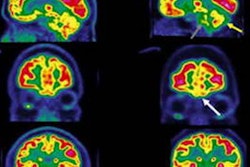
 Representative participant from each group shown. C-11 DTBZ non-displaceable binding potential (BPND) in voxels quantitated with simplified reference tissue model 2. Color scale indicates C-11 DTBZ BPND from 0 (black) to 3.5 (red), with reduced C-11 DTBZ BPND observed in the long COVID case compared to both healthy controls. eBioMedicine
Further, lower binding in the ventral striatum correlated with greater apathy and cognitive complaints, lower binding in the dorsal putamen correlated with slower performance on a finger-tapping test of motor speed, and lower binding in the dorsal caudate correlated with worse verbal memory performance, the authors reported.
“We know that inflammation can injure dopamine neurons. While our earlier research showed high-levels of inflammation in those regions, this study provides direct evidence that the dopamine neuron marker is reduced in the same regions – and that this loss correlates with patients’ symptoms,” said senior author Jeffrey Meyer, MD, in a news release from CAMH.
The findings suggest that treatments aimed at boosting dopamine release, such as dopamine precursors or inhibitors of dopamine metabolism, could be repurposed to treat long COVID, the authors noted. To that end, the team plans to launch a clinical trial in the coming months testing dopamine-targeted treatments for memory, motivation, and fatigue in participants with the condition.
Read the full study here.

![Comparative PET/CT scan images showing [18F]FAPI and [18F]FDG imaging with MIP projections, fusion views, and CT cross-sections for medical diagnosis](https://img.auntminnie.com/mindful/smg/workspaces/default/uploads/2026/10/fapi-vs-fdg.nL6Acp6W2i.jpg?auto=format%2Ccompress&fit=crop&h=100&q=70&w=100)



![Comparative PET/CT scan images showing [18F]FAPI and [18F]FDG imaging with MIP projections, fusion views, and CT cross-sections for medical diagnosis](https://img.auntminnie.com/mindful/smg/workspaces/default/uploads/2026/10/fapi-vs-fdg.nL6Acp6W2i.jpg?auto=format%2Ccompress&dpr=2&fit=crop&h=167&q=70&w=250)


