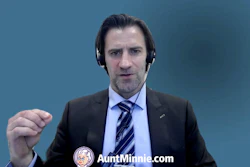
Abdominal imaging fellow Kaustav Bera, MD, and colleagues at Case Western Reserve University in Cleveland, have been vibe coding using Claude Code and ChatGPT Codex.
For the AuntMinnie Podcast Network, Bera explained how casual vibe coding outside the radiology department led to exploring sample real-world use cases for vibe coding in radiology. Bera foresees the rise of the "radiologist-developer" as a result of the availability of these easy-to-use AI coding tools.
AuntMinnie: What is vibe coding?
 Get to know Kaustav Bera, MD. In June, Bera will complete an abdominal imaging fellowship at Case Western Reserve University and plans to continue as an abdominal imager.
Kaustav Bera, MD: Vibe coding is this term that was popularized after LLMs like ChatGPT were super popular in November 2022. [It] seems like a long time ago that ChatGPT was launched for public use, but then since last year, I think there has been a push for people like software programmers or coders to use these LLMs in their daily use. So you could use these LLMs just to get snippets of code previously, which a lot of people in software development did when they had a doubt or when they wanted to debug some piece of code. But now what happened, and the word vibe coding was actually coined by this former OpenAI engineer Andrej Karpathy ... What it means is basically you're just having a conversation with the AI or the LLM, and that is doing the coding work for you. Previously, coding was this thing which was restricted to software engineers. You needed a degree and you needed to know specific programming languages ... but now you would have a conversation with these AI agents, and they would accomplish a majority of the task for you. ... What I feel is the key here is that it's kind of democratizing the process.
In a paper published online April 16 in the Journal of the American College of Radiology, Bera's group presented five examples of local radiology tools that he said vibe coding instantly built. The project will be of interest to radiologists and radiology residents interested in getting first-hand experience with AI coding tools.
According to Bera and colleagues, the process begins with an idea (identifying an unmet need), then a natural language prompt (describing the idea), and then refining the scope using domain expertise (defining data inputs and output format, iterative dialogue). From there begins error resolution (debugging), adding features, integrations, and safety checks (feature engineering), and packaging and deployment to end users.
This sequential process leads to a continuous update stage. It involves gathering peer feedback and reengaging with Claude Code for iterative improvements and regulatory updates (lifecycle management), the group explained. The key role of the radiologist-developer would be refinement using domain expertise.
AuntMinnie: You've made the vibe coding leap for radiologists. Tell us about the team that worked on this project and what sorts of day-to-day challenges you thought of that motivated it.
Kaustav Bera, MD: [This] actually came out of all of us just by coding ourselves in part of doing non-radiology things outside of work, and then we decided, why not use it for certain day-to-day challenges that we have. The broader term that everyone uses now is called agentic AI, which is basically the AI that is not limited to a certain thing. What this does is it directly interacts with the software that you use for daily life. For instance, I've had an Excel sheet that I want to do statistical analysis for. I had collected all the data. All the data is neatly organized or not neatly organized ... what you could do is copy your Excel sheet into this and just write a paragraph of what you want it to do ... it to find associations between the things ... to arrange the data for better use. ... What vibe coding has done is given radiologists, and everyone actually, physicians the power to develop things based on just idea. What has become now key is you need to have the idea and the implementation. The vibe coding software takes care of it, which previously you would need a dedicated software team and dedicated software developers to get that into execution. Is it as good as like a dedicated software team? Obviously not and it will have errors et cetera, but I think it's a good starting point to have your prototype of whatever you're thinking ... instead of you having to ramble on or describe your thoughts, you could just show what it actually would be.
Out of Bera's Claude Code and ChatGPT Codex project came five practical radiology tools (for example purposes only):
RadSigns: an encyclopedia of classic radiology signs, which would be improved with the radiologist-developer using real life examples from their collected cases.
RadDose: a radiation dose educator for referencing, comparing, and contextualizing radiation doses for different exams. This tool might include a pregnancy calculator and plain-language patient explorer.
ContrastSafe: a contrast administration safety dashboard that could be used to look up contrast safety based on the American College of Radiology (ACR)'s contrast manual.
DiffDx: a differential diagnosis builder that could eventually become an entry-level tool for a medical student exploring the world of radiology.
DiagAccuracy: a diagnostic accuracy workbench.
The group cautioned that these tools have not been checked thoroughly for errors.
"The key is to iterate multiple times," Bera said, also emphasizing the importance of keeping vibe-coded tools in the research lane rather than using them for diagnosis.
For now, the best use cases for vibe coding are those that do not involve protected health information (PHI) and do not risk clinical data being processed by cloud-based AI tools, Bera told AuntMinnie.
Find the complete paper here. Listen for the full conversation and Bera's final thoughts to take forward.
This conversation is brought to you by AuntMinnie and the AuntMinnie Podcast Network. Check out AuntMinnie's full podcast library, including extras, on Apple Podcasts and Spotify.