Long exposure to the realities of practicing radiology, advanced imaging techniques, and interventional radiology procedures laid the foundation for Vance Lehman, MD's new book, "Mastering the Hidden Curriculum: Unlocking Success in Medical Training."
For the AuntMinnie Podcast Network, Lehman explained not only how he came to define and operationalize the hidden curriculum, but what he discovered about today's culture of medicine through writing the book. For medical students, resident attendings, fellows, and educators, the book provides practical strategies for daily training scenarios.
"I had never heard of this thing called the 'hidden curriculum' until I just happened to stumble upon it in the literature just a few years ago," said Lehman, who currently leads neuroradiology education at the Mayo Clinic in Rochester, MN.
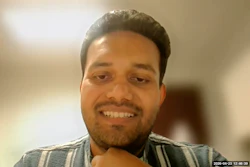
 Vance Lehman, MD, author of "Mastering the Hidden Curriculum: Unlocking Success in Medical Training," leads neuroradiology education at the Mayo Clinic in Rochester, MN.
Through practicing and reading, Lehman said he realized that the formal curriculum does a much better job of feeding information to residents than teaching them how to solve problems. Lehman fills the gaps using his book as the guide.
Editor's note: AuntMinnie has chosen three brief segments to introduce our audience to the author. Listen to the full episode to learn how Lehman breaks down the hidden curriculum, problem solving for radiology trainees, and controversies that are necessary to understand for real-world practice.
AuntMinnie: Can we start with the focus of your clinical practice and your path to neuroradiology education chief at Mayo?
Vance Lehman, MD: In terms of my clinical practice, I spend about 50% of my time doing diagnostic neuroradiology with a focus on advanced imaging techniques like vessel wall imaging or tractography and things like that. The other 50% of my time is spent doing various procedures, spine procedures, MRI-guided focus ultrasound, and laser ablation. In terms of education and my pathway there, I think it's important to point out that at our institution we have a really large group of neuroradiologists, about 60 neuroradiologists in all at any given time point, 60 potential residents or fellows who could rotate through, and multiple different work areas. There's a lot to orchestrate administratively.
At this point, what I do is largely administrative and orchestrating all of that, in addition to overseeing our fellowship and residency and admissions or interviewing for fellowship and that sort of thing. But how did I get here? Basically, after starting on staff in 2012, early on I took an interest in education, and I took the most basic role, which would be a resident liaison to our department. And what that entailed was basically working closely with the residents and setting their curriculum and doing their evaluations.
For over 10 years now, I've been able to have a front view seat for basically what the resident evaluations are, what the residents think they know, what they actually do know. Basically, it's given me the opportunity to have a big global overview of what's going on but yet to be close enough to the ground level to stay in touch with education and what the residents are really experiencing.
AuntMinnie: You've highlighted the concept of the "hidden curriculum." What is your definition of the hidden curriculum, and how did you get to the point in your career experience that you felt like you had to write a book about it?
Vance Lehman, MD: The short answer is that we have a formal curriculum we're all familiar with. It's syllabus. It's something that's official, it's structured, and it's acknowledged. But there's also a hidden curriculum that is unofficial, unstructured, and not formally acknowledged. I do think it's important to go into a little bit more depth, though, to really understand what the hidden curriculum is, so when you hear that term, you can understand what's going on.
Just take a moment to understand the origin of where it came from. It turns out that that term really was introduced in a 1968 book called "Life in Classrooms," by an education researcher named Philip Jackson. What he did that was interesting is instead of using surveys, he went and he actually sat in classrooms and watched and observed what happened. And he quickly realized that the major things that impacted outcomes for the students were not things that he expected in the formal curriculum, but they were other things. They were things like peer interactions and learning how to respect hierarchies in the classroom, responses to rewards, and just the overall impact of the environment. So basically, in the end, he felt, and this is his words, he said that mastering this hidden curriculum was critical for the success of grade school students. But he described it, and he introduced the term, but he didn't give us a formal definition. So now we're left with this complex concept of the hidden curriculum. And that opened the door for other researchers then to define it in their own words in slightly different ways, applying it to colleges and law school and then medical school. That created some confusion.
What I did is I looked at all of the different ways it had been defined and used and tried to find a unifying definition. For the book, I considered all of this and I gave it my own definition of: unspoken expectations, invisible challenges, and stealth influences. Of course, that definition needs some context, but you can see where it can make sense in radiology. Unspoken expectations could be things like, you know, don't cherry pick off the list, don't take five minutes between cases. Invisible challenges could be things like, I've given this information, how do I solve problems? Stealth influences could be things like role modeling and developing professional behavior. I think that definition encompasses what the spirit really is.
AuntMinnie: Did you have a preconceived notion of the culture of medicine before you wrote the book, or did the culture of medicine as you see it now emerge as a result of writing the book?
Vance Lehman, MD: In truth, I didn't think much about culture at all before I started researching his book. Like most of us in medicine, I didn't receive formal training on it. I did have some concepts. Researching this book and looking more into the organizational psychology literature, which I draw in a lot for the book, I realized that it's actually real.
The concept of culture is very powerful and more complex than a lot of us realize. To understand what it is, I think it's good to maybe just take one second and ask ourselves, you know, what is culture? What is it? Is it what you see? Is it something else?
Let's just say you're in a training program that during the day, you're told quality matters. We put quality of our reports and patient care above everything else. But at nighttime, you're asked to read 300 cases as fast as you can. That's a conflict. You've got what you're told that we say we believe is quality, but what you're actually doing, the top layer is actually volume. And the top layer probably reflects the deepest assumptions, the deepest assumptions, what you really believe, yeah, you think quality matters, but what really matters is volume. And, you know, maybe not having people say too many people work overnight shifts or something like that. So it's important to understand that because you find yourself, and we can find ourselves in situations where we're receiving mixed messages, and it just helps us kind of work through that.
The book is Mastering the Hidden Curriculum: Unlocking Success in Medical Training, by Vance T. Lehman, MD; CRC Press, 2026. Listen now.
This book talk is brought to you by AuntMinnie and the AuntMinnie Podcast Network. Check out AuntMinnie's full podcast library, including extras, on Apple Podcasts and Spotify.